Three Abstract Artists Who Shifted Toward a Pop Art Aesthetic by the Mid1950s
35+ Most Famous Popular Art Artists & Their Best Works
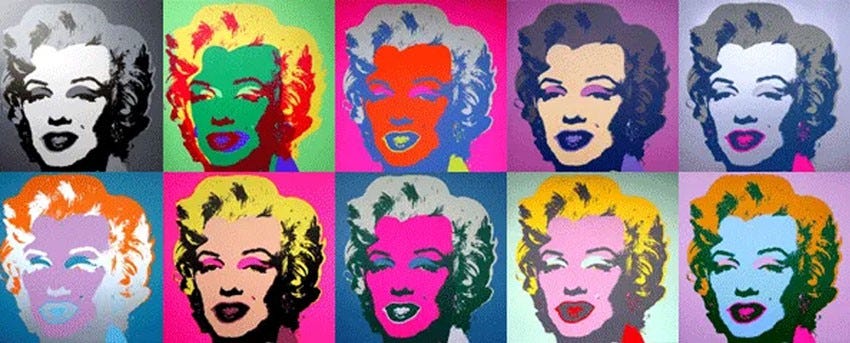
What is Pop Art?
Pop Art is an art movement from the mid-1950s to the 1960s in the United Kingdom and the U.s.. The popular fine art artists created works inspired by the realities of everyday life and the popularular culture. The main popular fine art themes include irony and satire, humor, optimism, affluence, materialism, leisure, and consumption of postwar order.
Famous pop art artists such as Andy Warhol, Roy Lichtenstein, and Richard Hamilton questioned elitist culture and the fine fine art traditions. Instead they used imagery and techniques drawn from mass media 📢 and mass culture.
This is simply a list of the most famous pop art artists and a few data about their best known work.
If you are actually serious nigh art in general and specifically pop art, there is a lot of literature around the topic. Pop Art: A Critical History published by University of California, is probably 1 of the best books about this topic. If you purchase this book it's true I become a very minor commission, merely you also get the all-time deal on this book.
Plus, the New York Times called this book an "indispensable compendium" for popular art, and so I approximate it's safe to assume that information technology's a must take if you are really into pop art.
History of Popular Art & Pop Art Artists
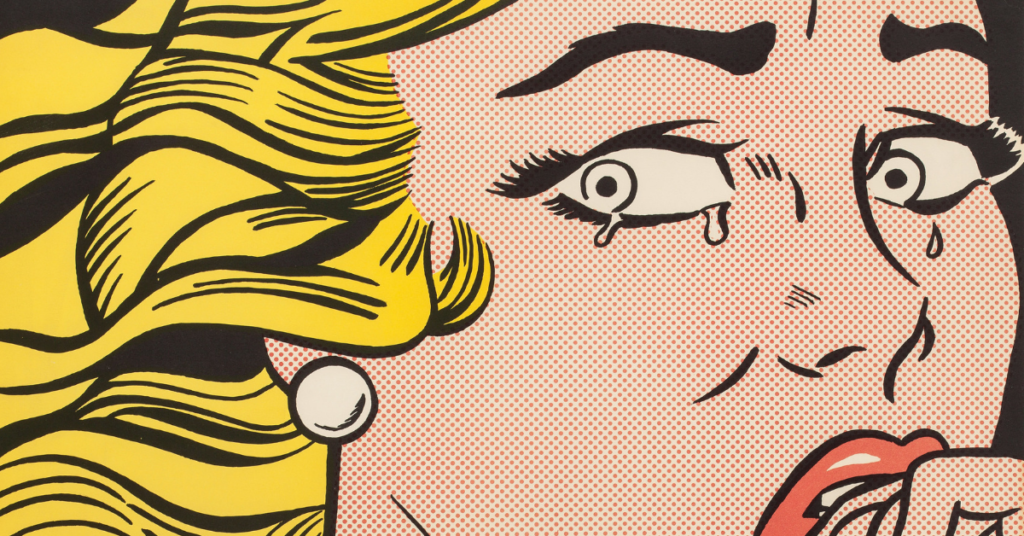
So, the Pop fine art movement began in the mid-1950s in Britain by a group of painters, sculptors, writers, and critics called the Independent Group.
British Pop Fine art
Independent Group (Found of Contemporary Fine art)
- Richard Hamilton
- Edouardo Paolozzi
- Peter Blake
- John McHale
- Lawrence Alloway
- Peter Reyner Banham
- Richard Smith
- Jon Thompson
All of the Independent Group participated in a 1956 group exhibition at the Whitechapel Gallery, This is Tomorrow, featuring what they called a "New Eden." The new Paradise was post-war America with its abundant consumer culture where all things seemed to be possible, from space travel to readily available sex.
Young Contemporaries (Royal Higher of Art)
- R. B. Kitaj
- Peter Philips
- Baton Apple (Barrie Bates)
- Derek Boshier
- Patrick Canfield
- David Hockney
- Allen Jones
- Norman Toynton
The pop art movement spread soon after into the U.s.a.. Much of the movement's roots were prompted by a cultural revolution led by activists, thinkers, and artists who aimed to restructure a social order ruled by conformity.
American Pop Art (New York Pop Art)
- Roy Lichtenstein
- Andy Warhol
- Robert Indiana
- George Brecht
- Marisol (Escobar)
- Tom Wesselmann
- Marjorie Strider
- Allan D'Arcangelo
- Claes Oldenberg
- George Segal
- James Rosenquist
- Rosalyn Drexler
American Pop Art (California Pop Art)
- Billy Al Bengston
- Edward Kienholz
- Wallace Berman
- John Wesley
- Jess Collins
- Richard Pettibone
- Mel Ramos
- Edward Ruscha
- Wayne Thiebaud
- Joe GoodeVon Dutch Holland
- Jim Eller
- Anthony Berlant
- Victor Debreuil
- Phillip Hefferton
- Robert O'Dowd
- James Gill
- Robert Kuntz
After the motility burst onto the scene in the United States, it speedily spread beyond the world and continues to influence fine art and popular civilization today.
Japan Pop Art
- Yayoi Kusama
- Takashi Murakami
- Yoshitomo Nara
- Tadanori Yokoo
Italian Pop Art
- Mario Schifano
- Tano Festa
- Renato Mambor
- Franco Angeli
- Mimmo Rotella
- Giosetta Fioroni
- Mario Ceoli
- Enrico Baj
- Cesare Tacchi
Characteristics of Popular art
The Pop art movement presented a challenge to traditions of art by including imagery from popular and mass culture, such as advertising, comic books and mass-produced cultural objects.
Ane of its aims is to use images of popular (as opposed to elitist) civilisation in art, emphasizing the bland or kitschy elements of any culture, well-nigh often through the employ of irony. These are just some of the pop art facts that you need to know to better understand this art motility.
Beneath are some of the defining characteristics of Pop art:
- Recognizable imagery: Pop art artists used images and icons from popular media and products. These graphic images include photos of celebrities, body parts, everyday objects like soup cans (Campbell's Soup Cans by Andy Warhol), h2o bottles, product labeling, mobile phones, cigarettes, furniture, road signs, and other items popular in the commercial earth.
- Bright colors: Popular art is characterized by vibrant, bright and saturated colors. By using these vibrant colors & bold outlines, pop artworks take hold of the attention of the audience instantly
- Irony and satire: These were some of the main components of Pop art. Pop art artists use humour and irony to make a argument virtually current events.
- Innovative techniques: To quickly reproduce images in large quantities, many popular art artists used printmaking processes. Andy Warhol used silkscreen press process (ink is transferred onto newspaper or canvass through a mesh screen with a stencil). Roy Lichtenstein used lithography technique (press from a stone or a metal plate with a shine surface).
- Mixed media and collage: Pop art artists often combined different materials and utilized a multifariousness of different types of media. Some of the popular artists that used collage in their works are Robert Rauschenberg, Richard Hamilton and Peter Blake. They combined disparate images, newspaper prints and paper cut-outs into a unmarried canvas to create a new whole. For making pop fine art collage, even brand names and logos were added.
Famous Pop Art Works
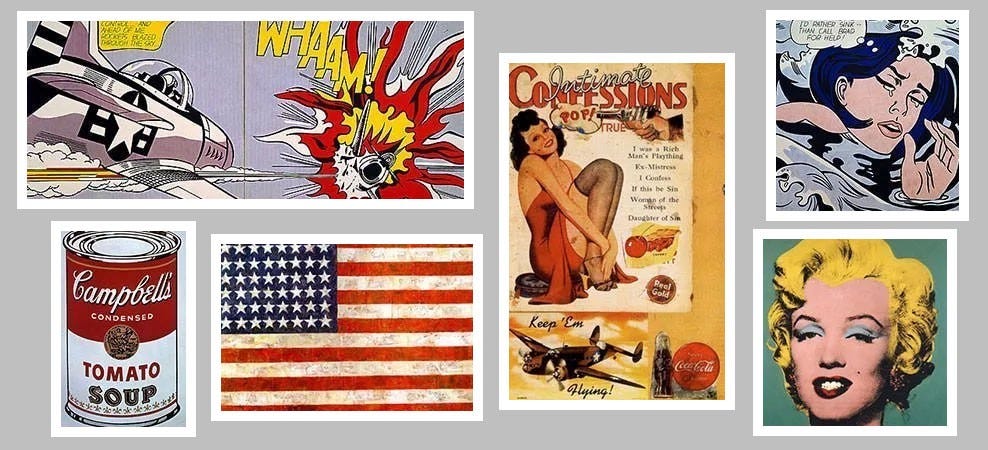
Famous pop art works include: Campbell'southward Soup Cans (1962) past Andy Warhol, Whaam! (1963) by Roy Lichtenstein, Marilyn Diptych (1962) past Andy Warhol, I was a Rich Human being's Plaything (1947) by Eduardo Paolozzi, Flag (1955) by Jasper Johns, But what is it that makes today's homes then different, so appealing (1956) by Richard Hamilton.
For more pop art examples, read each department dedicated to the best pop art artists around the world.
Famous Pop Art Artists
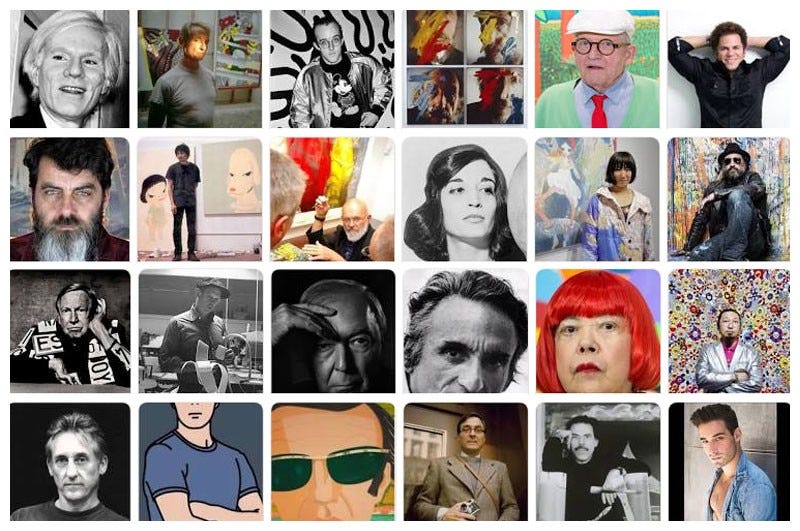
The popular fine art history begun with the early on artists that shaped the pop art movement. Among these first pop art artists were Eduardo Paolozzi and Richard Hamilton in Britain, and Larry Rivers, Robert Rauschenberg and Jasper Johns among others in the United States.
In American art, famous exponents of Pop Fine art included Robert Rauschenberg (1925–2008), Jasper Johns (b. 1930), Roy Lichtenstein (1923–97) and Andy Warhol (1928–87).
Top British Pop Art artists included Sir Peter Blake (b. 1932), Patrick Caulfield (1936–2005), Richard Hamilton (b. 1922), David Hockney (b. 1937) and Allen Jones (b. 1937).
Andy Warhol (1928–1987) US
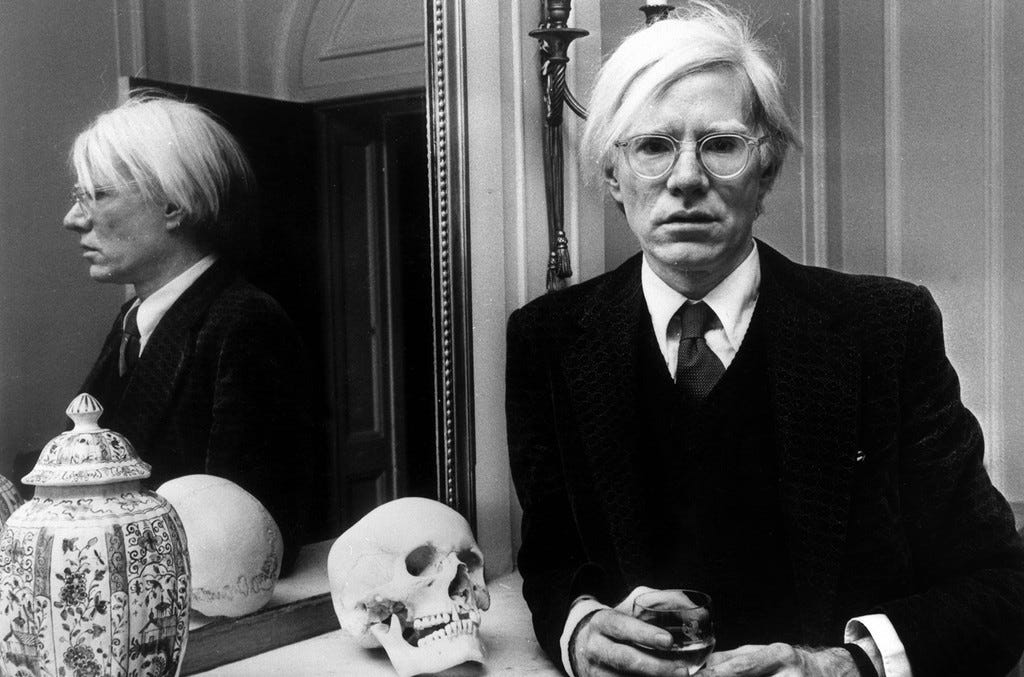
When introducing pop art, it is imperative to quote Andy Warhol as probably the almost influential and complete representation of this culture and motility. With his distinctive and very personal manner, Warhol gave voice to the star-system like nobody else. His subjects were elevated to the part of icons of the modern pop fine art society and his studio, also known as Factory, became the hive where many other powerful personalities implemented their linguistic communication.
Andy Warhol's Marilyn Diptych, 1962
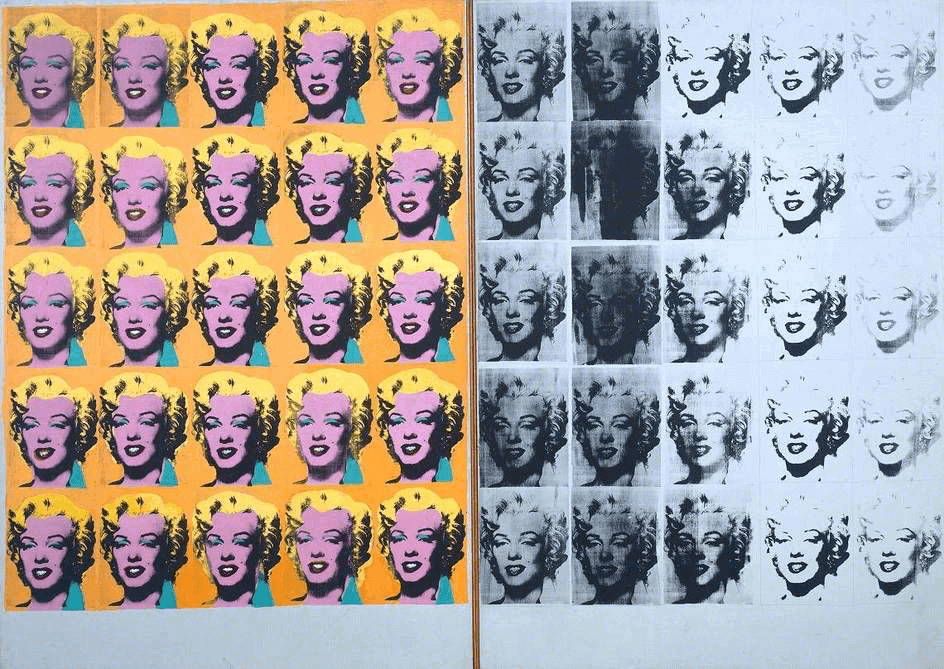
The technique used for this painting was silk-screening. The work contains 50 images of Marilyn Monroe, half of which are painted in colour, the other half in black-and-white. The piece of work was completed in the weeks following the extra's expiry.
Roy Lichtenstein (1923–1997) US
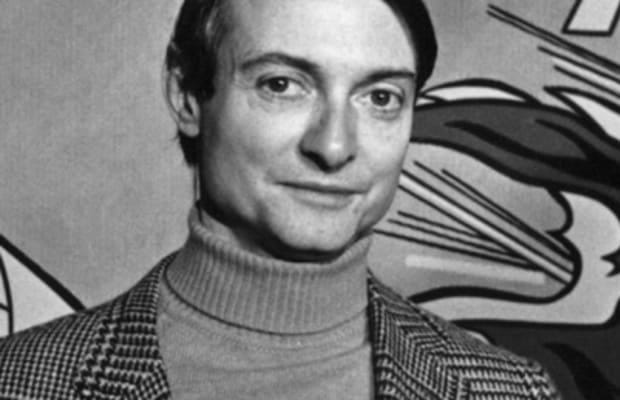
Roy Flim-flam Lichtenstein can besides be seen as one of the fathers of the modernistic pop art movement, with a style that was influenced by the highest levels of artistic expression from the concluding century, like pointillism, cubism and expressionism. In his piece of work, we tin encounter how an imaginary that belonged to advertising and comics, is transposed to a dissimilar scale and used to create icons that are highly related to the mass.
Roy Lichtenstein's Whaam!, 1963
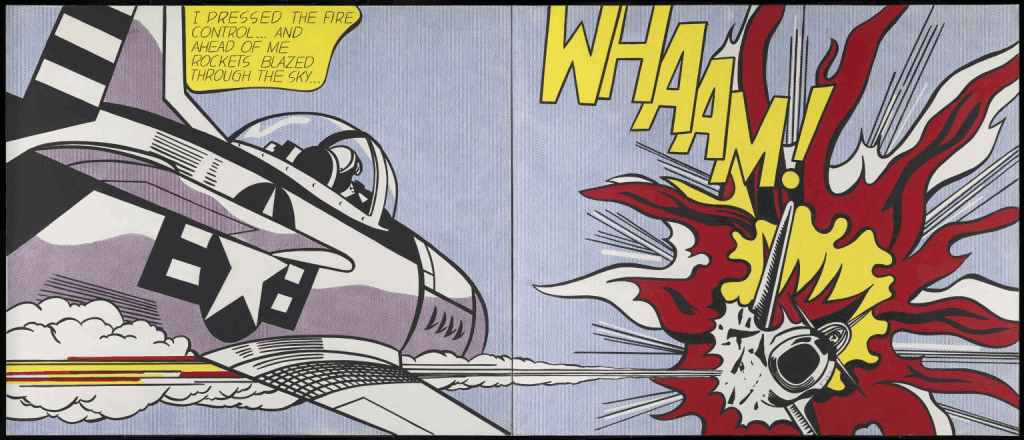
Roy Lichtenstein'southward Whaam! is a large, two-canvas painting composed similar a comic volume strip of a rocket explosion in the sky. Lichtenstein was interested in portraying highly charged situations in this particularly detached, calculated manner.
Keith Haring (1958–1990) Us
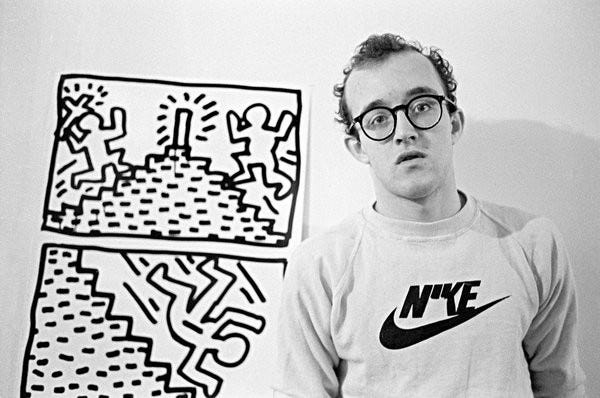
Street creative person, at first, Keith Haring's style has a potent relation with his childhood and those unproblematic cartoonish figures his father used to make for him. As he stated: "My dad made cartoon characters for me, and they were very similar to the way I started to draw — with one line and a cartoon outline". His artistic banner was subsequently developed in Pittsburg, and then mastered when he went to New York Urban center and met Jean-Michel Basquiat, with whom he became close friends with.
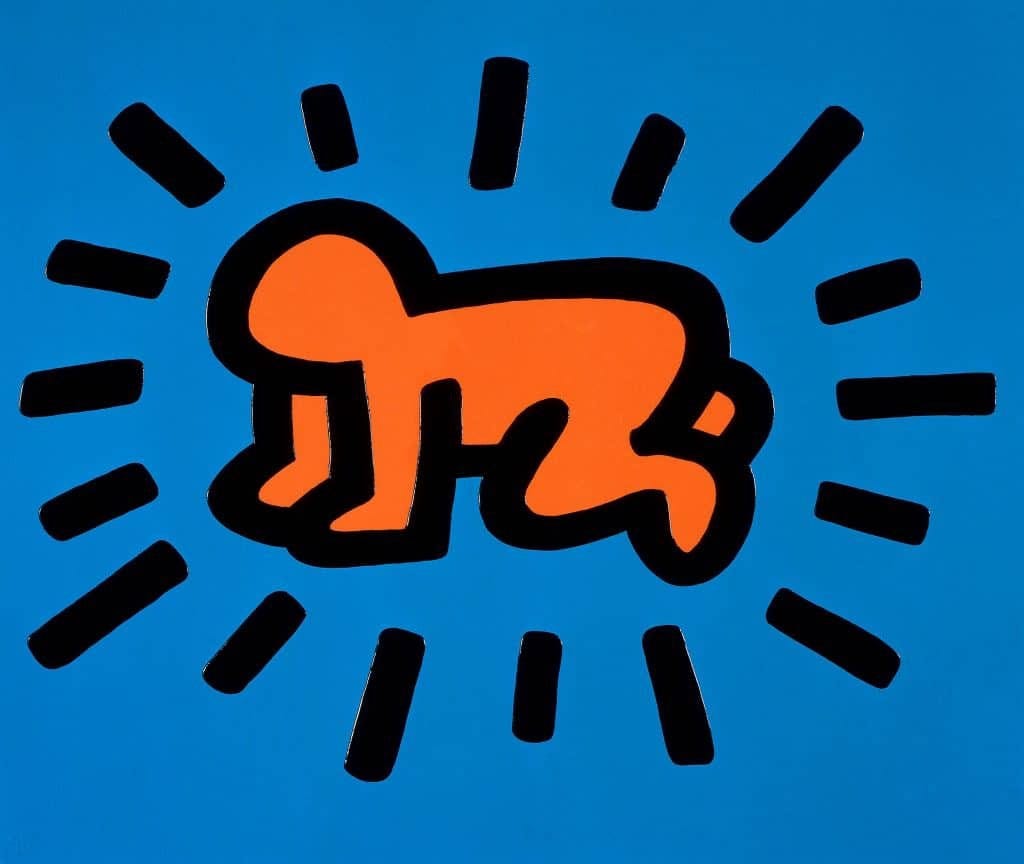
Keith Haring's Radiant Infant, 1982
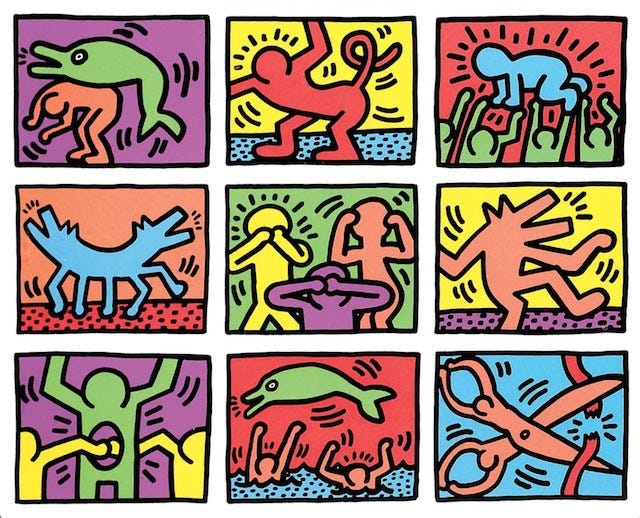
Keith Haring, series of paintings. Albertina Museum, Wien
In 1980s New York, Keith Haring turned the subway into his studio. Using chalk, he etched his signature designs onto the walls. One of these was his Radiant Babe, which to him was i of the purest and virtually positive human experiences. Information technology became a recurring visual idiom of Haring's throughout the years and is at present considered the creative person's signature tag.
Richard Hamilton (1922–2011) UK
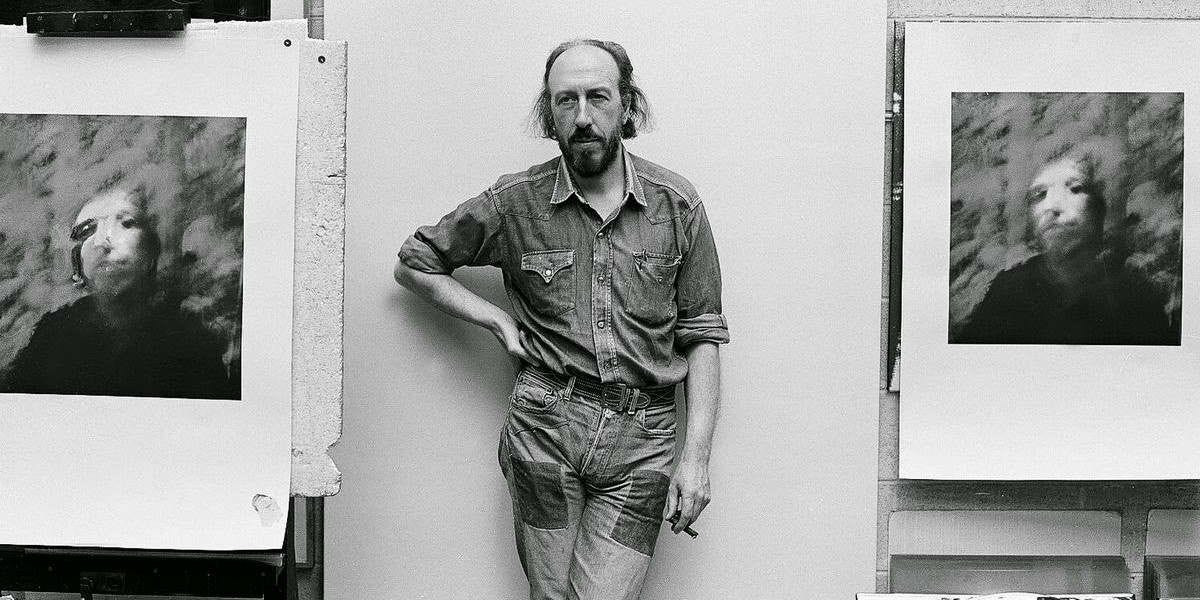
Built-in in 1922, in Pimlico, London, Hamilton was role of a very strong British generation of popular art artists. His collage "Just What is it that makes today'southward homes so different, so appealing?" (1956), guaranteed his entry in the famous pop art artists category, and is considered by some critics the first pop artwork always produced.
Richard Hamilton's Just What Is It That Makes Today's Homes So Different, So Highly-seasoned?, 1956
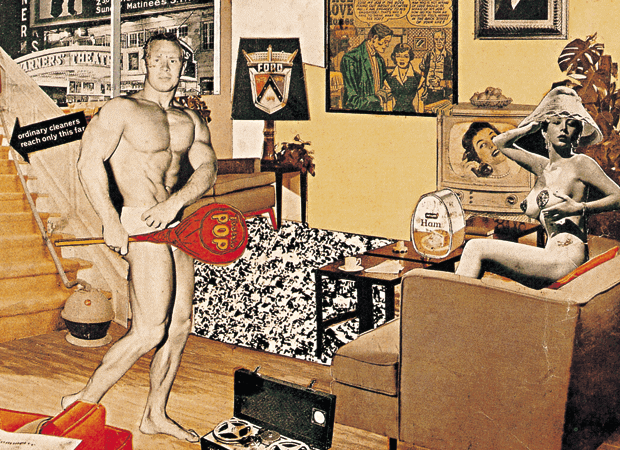
Richard Hamilton'due south collage presents a living room space filled with objects and ideas that, according to Hamilton, were crowding into the mail-state of war consciousness. Drawing the viewer'south attention is the effigy of a trunk-builder belongings a giant lollipop with the word 'POP' scrawled on it. Not surprisingly, so, this collage is often referred to equally the first example of Pop Art.
Robert Indiana (aka Robert Earl Clarke) (1928–2018) Us
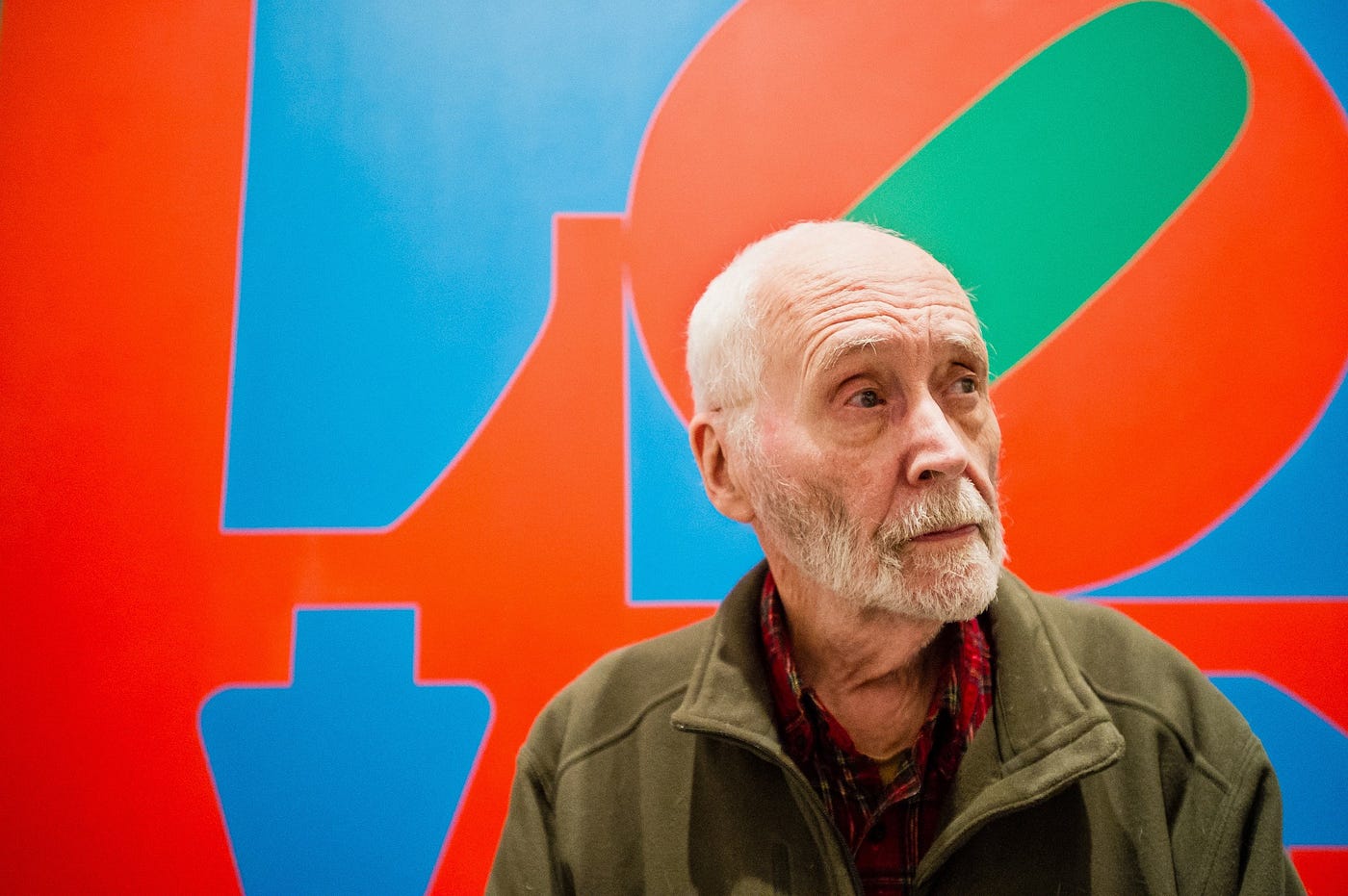
A major figure in American art since the 1960s, Robert Indiana played a central role in the development of assemblage art, hard-edge painting, and Popular art. Indiana, a self proclaimed "American painter of signs," created a highly original body of work that explores American identity, personal history, and the power of abstraction and language.
1966 marked a turning point in Indiana'southward career with the creation of his kickoff Dearest sculpture, which has go an icon of 20th Century Art. Monumental examples have been installed and displayed around the world.
Robert Indiana's Honey, 1967.
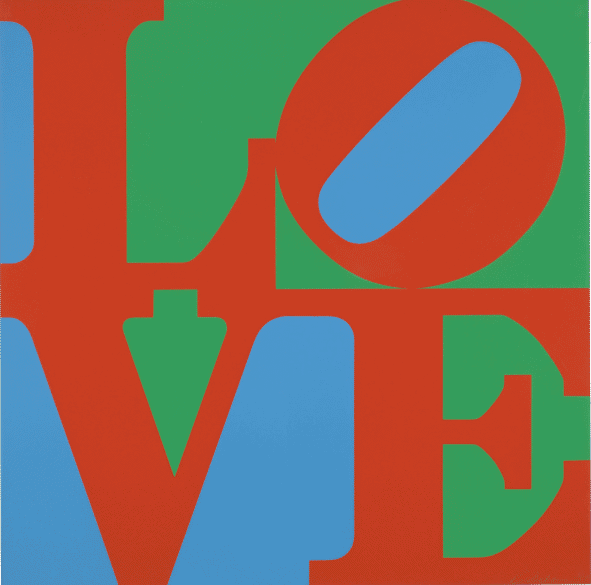
Born Robert Earl Clark in Newcastle, Indiana, Robert Indiana took his native's land's proper noun in 1958 during his fourth dimension in New York on Coenties Sideslip. Indiana'south breakthrough image Honey has become one of the most well-known images associated with the Pop art movement. The image was selected by the Museum of Mod Art for their annual Christmas bill of fare and apace permeated wider pop culture.
Eduardo Paolozzi (1924–2005) UK
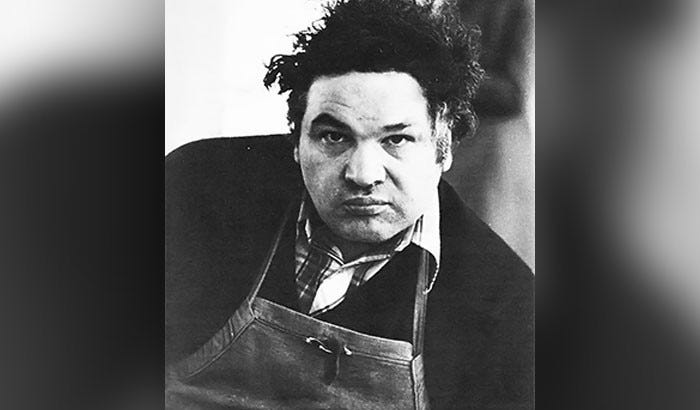
Eduardo Paolozzi was born on 7 March 1924, in Leith in north Edinburgh, Scotland, and was the eldest son of Italian immigrants.
Paolozzi studied at the Edinburgh College of Art in 1943, briefly at Saint Martin'due south School of Art in 1944, then at the Slade Schoolhouse of Fine art at University Higher London from 1944 to 1947, after which he worked in Paris. While in Paris from 1947 to 1949, Paolozzi became acquainted with Alberto Giacometti, Jean Arp, Constantin Brâncuși, Georges Braque and Fernand Léger.
Paolozzi came to public attention in the 1950s past producing a range of striking screenprints and Art brut sculpture. He was a founder of the Independent Group in 1952, which is regarded as the precursor to the mid-1950s British and belatedly 1950s American Pop Fine art movements.
Paolozzi'south I was a Rich Man's Plaything (1947) is considered the beginning standard bearer of Pop Fine art and outset to display the word "popular".
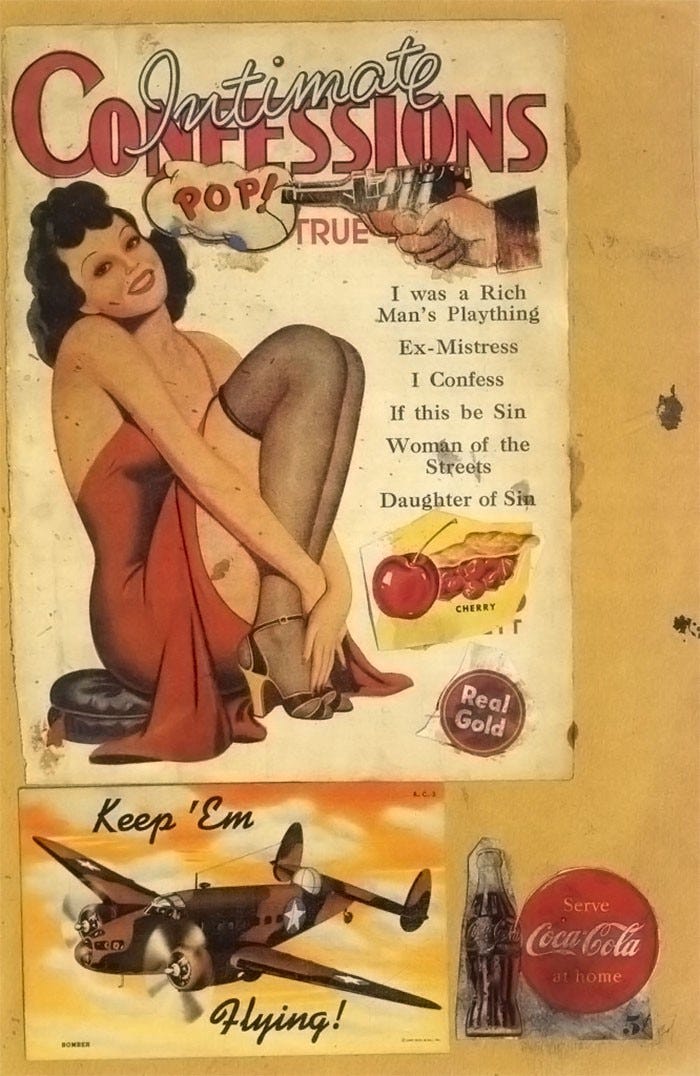
Other notable works are: the mosaic patterned walls of the Tottenham Court Road tube station, the embrace of Paul McCartney's album Red Rose Speedway, the ceiling panels and window tapestry at Cleish Castle, the Piscator sculpture exterior Euston Station, London Relief aluminium doors for the University of Glasgow'south Hunterian Gallery, the bronze sculpture Newton after Blake, 1995, in the piazza of the British Library, etc.
Robert Rauschenberg (1925–2008) US
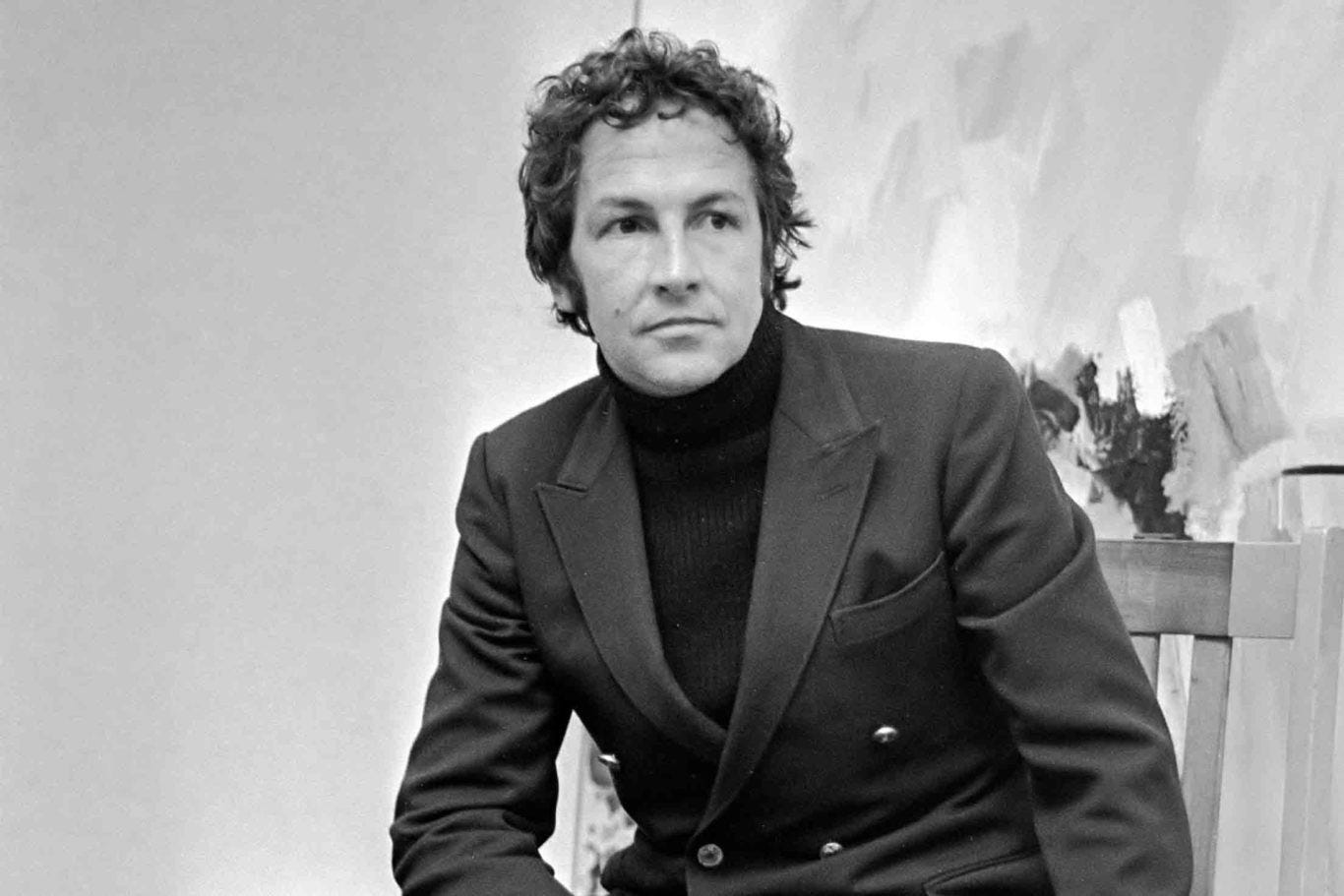
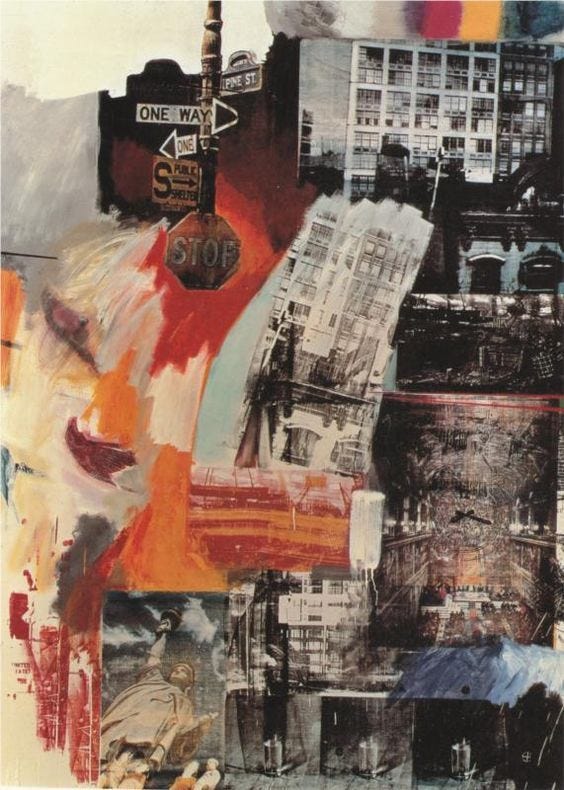
Robert Rauschenberg was an American photographer and a painter who was very close to pop art only never really stuck completely to the movement. He was also often referred to as neo dadaist and shared this label with Jasper Johns. His piece of work became very peculiar during the 1960s when he began introducing institute pictures in his paintings by using serigraphy to transpose them on the canvas; a process that brought him closer to Andy Warhol'southward work.
Robert Rauschenberg, Manor (1963), oil and silkscreen in on canvas.
Jasper Johns (b. 1930) US
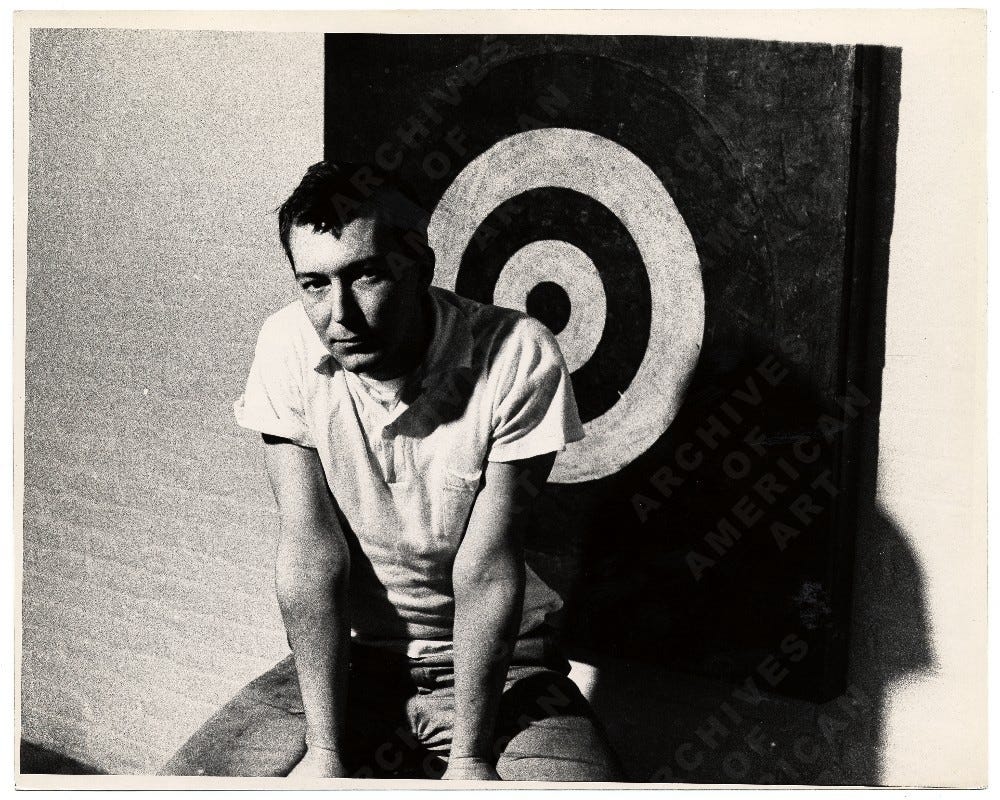
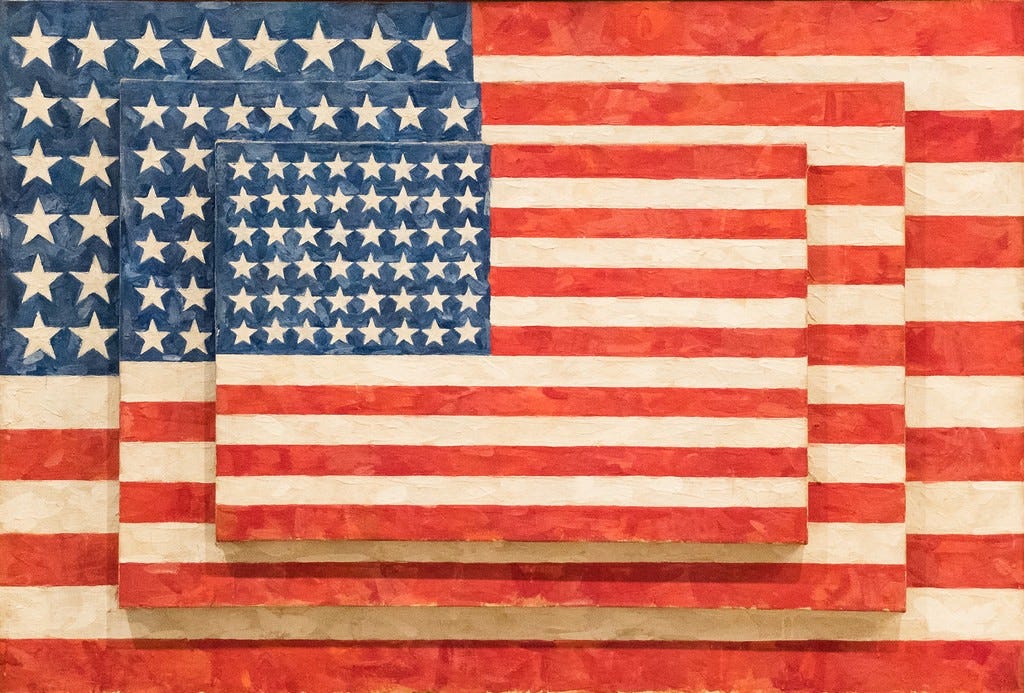
Built-in in South Carolina, in Allendale, Jasper Johns moved to New York in 1949, when he decided to study for a few semesters at Parson'due south Design Schoolhouse. Only it didn't have long for him to enter the art scene with some works that brought up an inedited relation betwixt existent images and painted images. Due to his closeness to everyday consumeristic symbols, he can be defined every bit a pop fine art artist, every bit we can see with his work "Three Flags" (1958).
Jasper Johns, 3 Flags (1958), oil on sail. Whitney Museum of American Art
Jim Dine (b. 1935) US
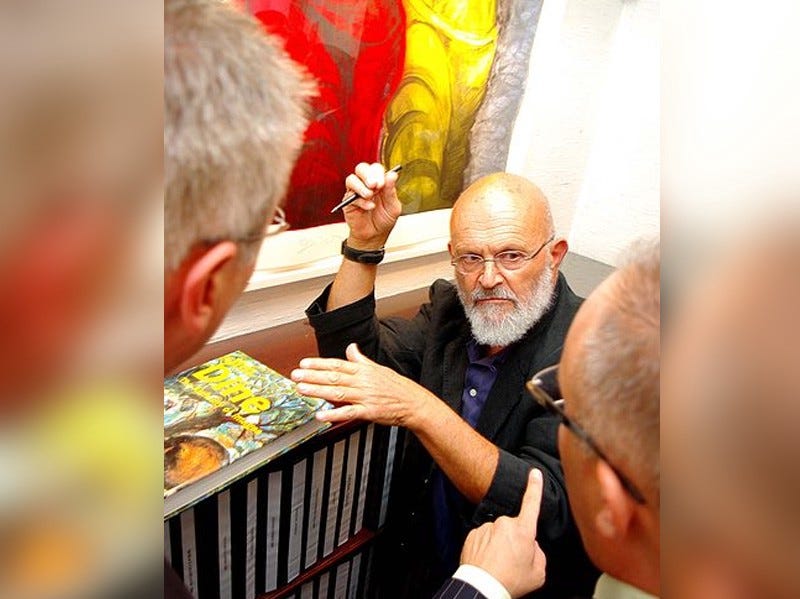
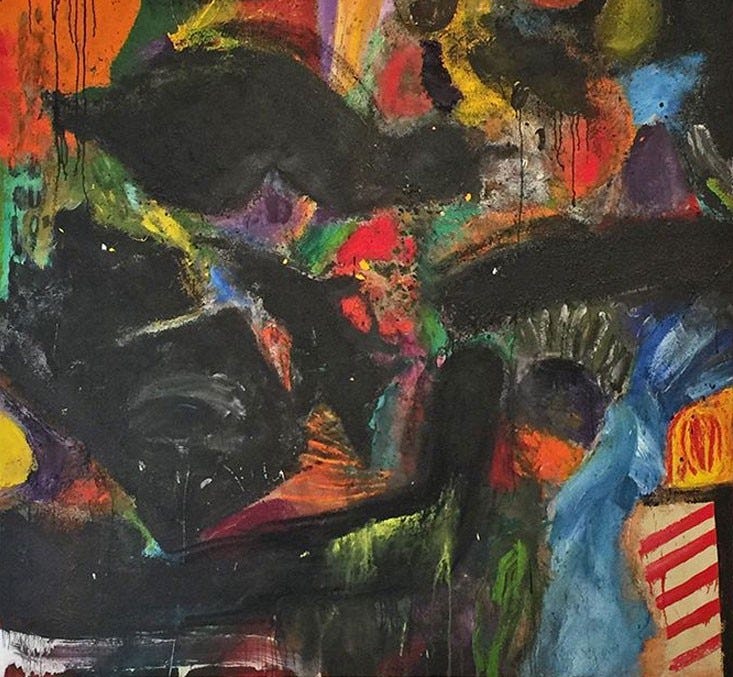
Another incredibly famous mod popular fine art artist, is Jim Dine, one of America'southward most agile pop fine art creative person, with lx years of career behind him and appearances in the international scene at very important fairs like dOCUMENTA Kassel and the Biennale in Venice. Besides every bit Jasper Johns and Robert Rauschenberg, he was part of the new dada movement and is also a phase writer, photographer and sculptor.
Jim Dine, A Sign of its Stake Color, Tenderness (2015)
Ray Johnson (1927–1995) U.s.a.
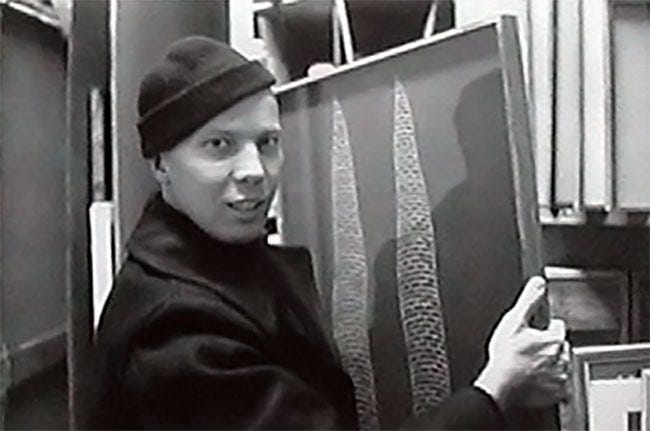
Raymond Edward "Ray" Johnson was an American artist. Known primarily as a collagist and correspondence creative person, he was a seminal effigy in the history of Neo-Dada and early Pop fine art and was described every bit "New York's most famous unknown artist". Johnson also staged and participated in early on performance fine art events as the founder of a far-ranging post art network — the New York Correspondence Schoolhouse — which picked upwardly momentum in the 1960s and is still active today. He is occasionally associated with members of the Fluxus movement only was never a member. He lived in New York Metropolis from 1949 to 1968, when he moved to a pocket-size town in Long Island and remained there until his suicide.
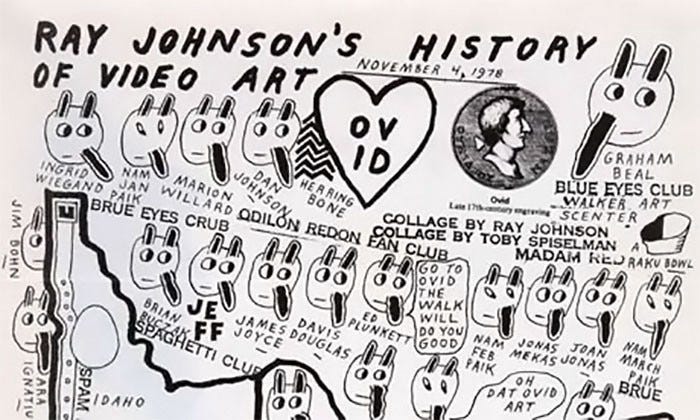
Ray Johnson, History of Video Fine art (1960)
Alex Katz (b. 1927) The states
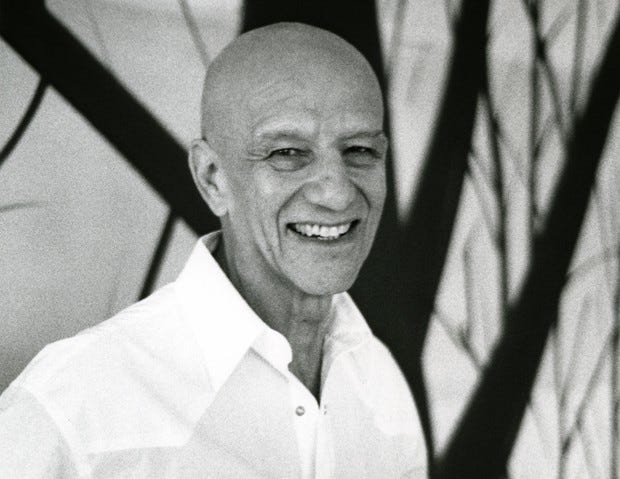
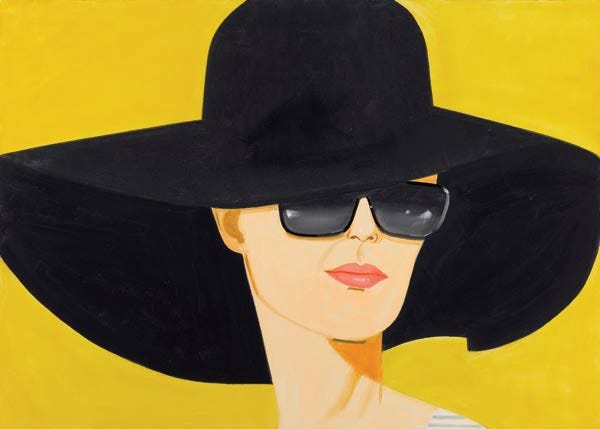
An incredible painter. One of those personalities who are hard to label and categorize. Alex Katz, who is still alive and painting at the age of 92 years quondam, adult a style in which we can find relations both with abstract expressionism and pop art. As famous as he got he hasn't stopped creating fresh and influential paintings, which are nowadays all around in the about prestigious exhibitions and museums.
Alex Katz, Black Hat
Claes Oldenburg (b. 1929) United states
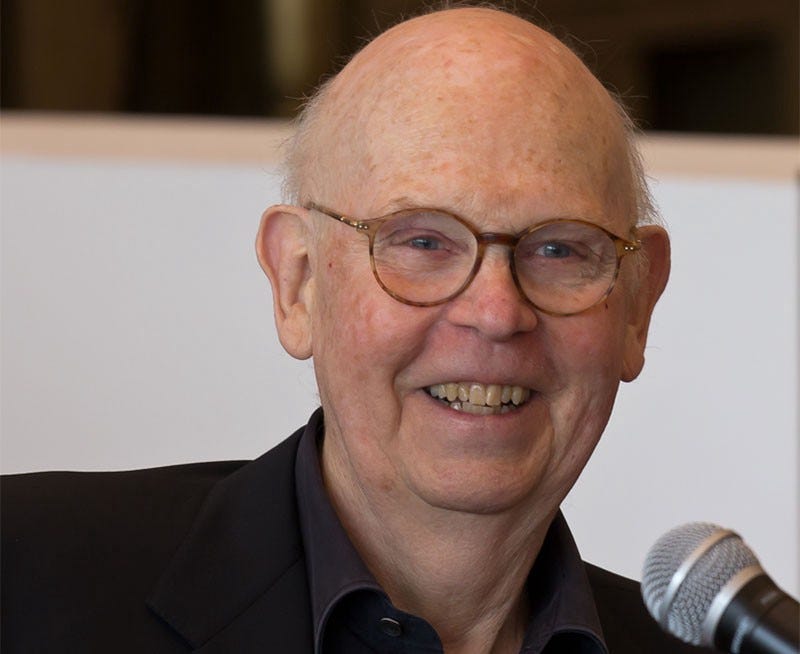
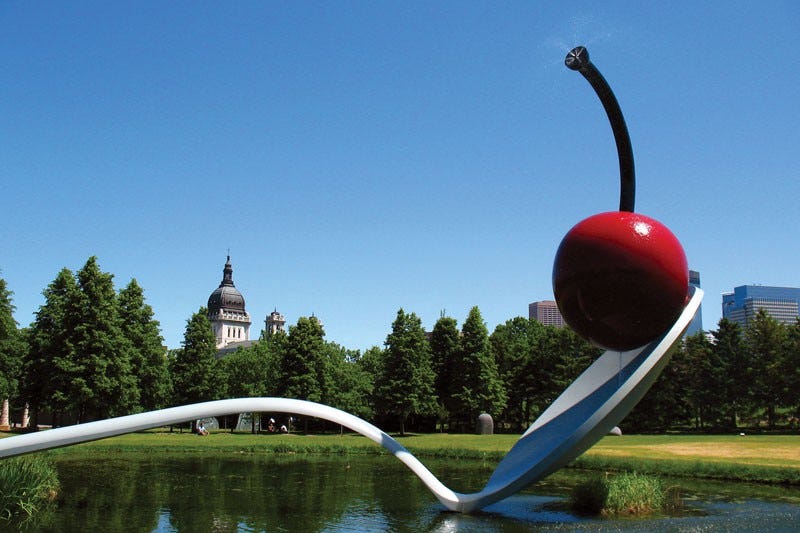
Claes Oldenburg is an American sculptor, best known for his public art installations typically featuring large replicas of everyday objects. Another theme in his piece of work is soft sculpture versions of everyday objects. Many of his works were made in collaboration with his married woman, Coosje van Bruggen, who died in 2009; they had been married for 32 years. Oldenburg lives and works in New York.
Spoonbridge and Red , sculpture past Claes Oldenburg and Coosje van Bruggen, 1985–88; in the Minneapolis Sculpture Garden of the Walker Art Center, Minneapolis, Minnesota.
Edward Ruscha (b. 1937) United states of america
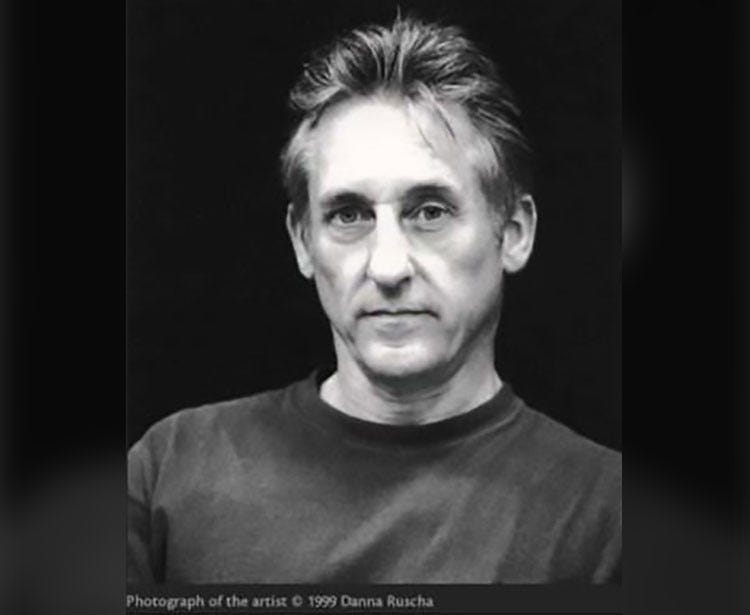
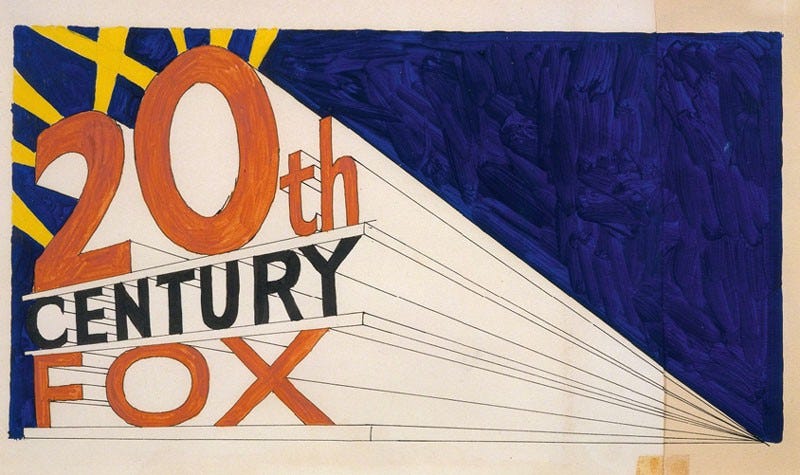
Edward Ruscha is an American pop fine art artist whose medium was photography and principal influences were Jasper Johns, Marcel Duchamp and Edward Hopper. His career brought him to cooperate with many different realities simply the peak point of his work is the participation to the earth-famous exhibition "New Painting of Common Objects", in 1962, featuring Warhol, Lichtenstein and other famous pop fine art artists.
Edward Ruscha, Trademark #7, (20th Century Fox), 1962
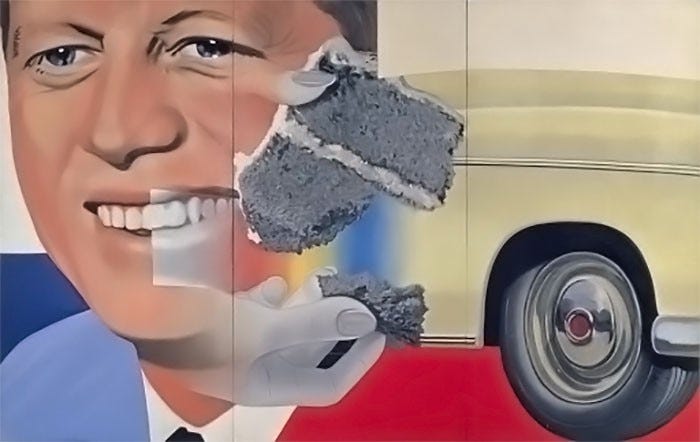
James Rosenquist (1933–2017) US
Some other extremely important and famous pop art artist, is with no incertitude James Rosenquist, who tin be considered, also equally Warhol and Lichtenstein, as one of the strongest and most influential modern pop art artists. His work dives deep into cinematography and ad and creates a fragmented image of these streamlines and their icons.
James Rosenquist, President-Elect, 1960–61/1964, oil on linen. Heart Pompidou, Paris
Tom Wesselmann (1931–2004) US
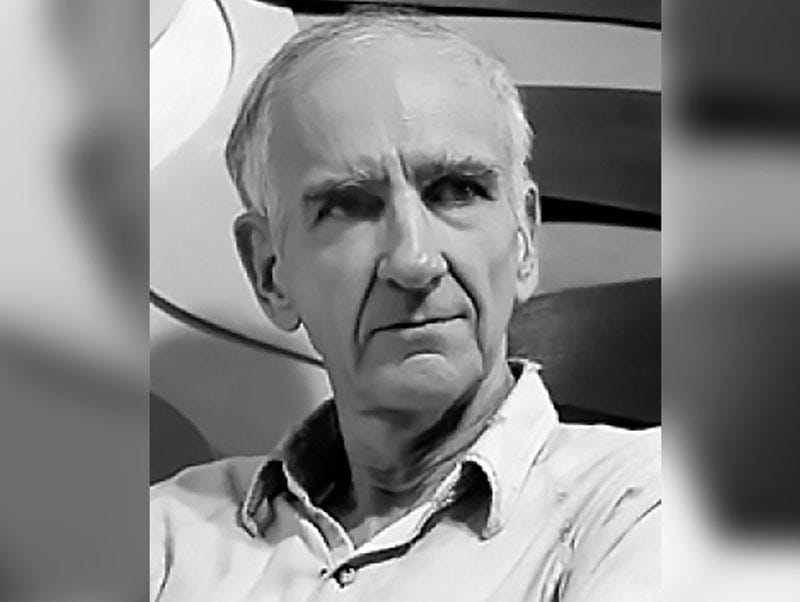
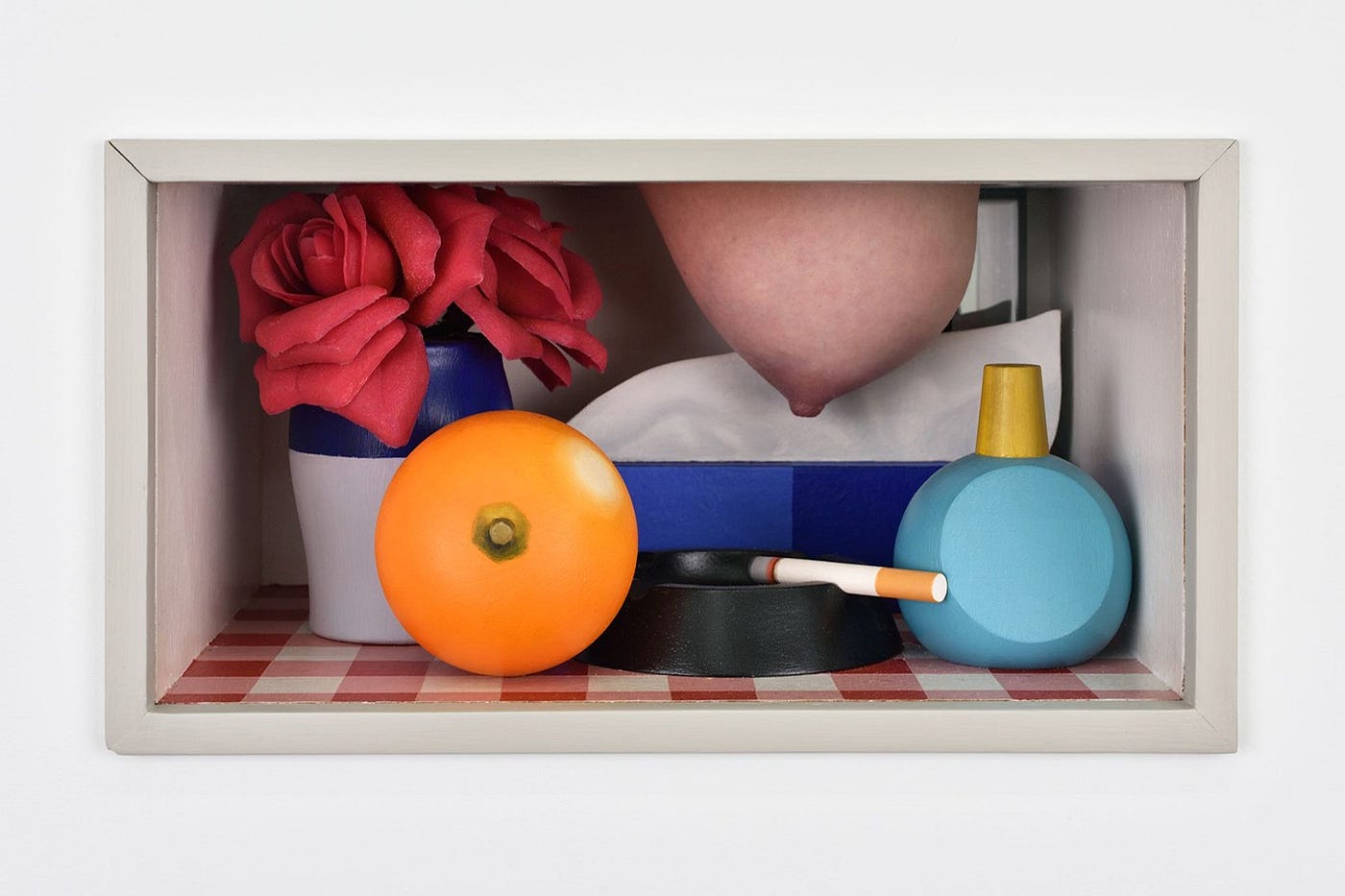
Very close to Jim Dine'due south research, Tom Wesselmann gave a strong poetic twist to the subjects that were mostly used by other famous pop art artists. His work combines realistic objects with surreal, dreamy and illusionistic spaces, made with strong chromatic surfaces.
Tom Wesselmann, Bedchamber Tit Box (1968–1970). Courtesy of Almine Rech Gallery
Sir Peter Blake (b. 1932) UK
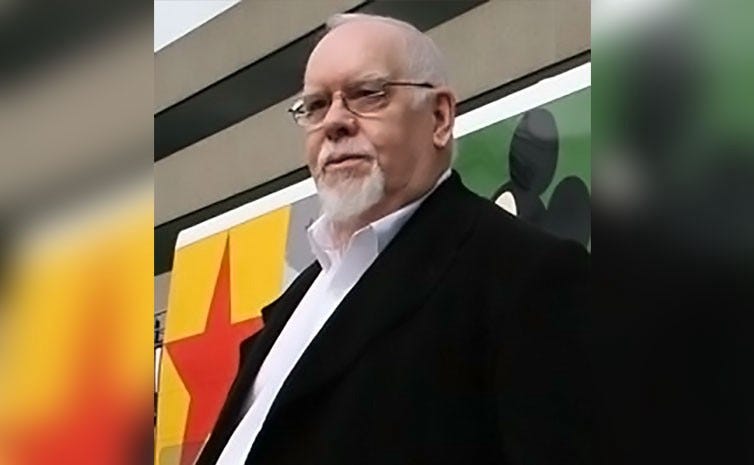
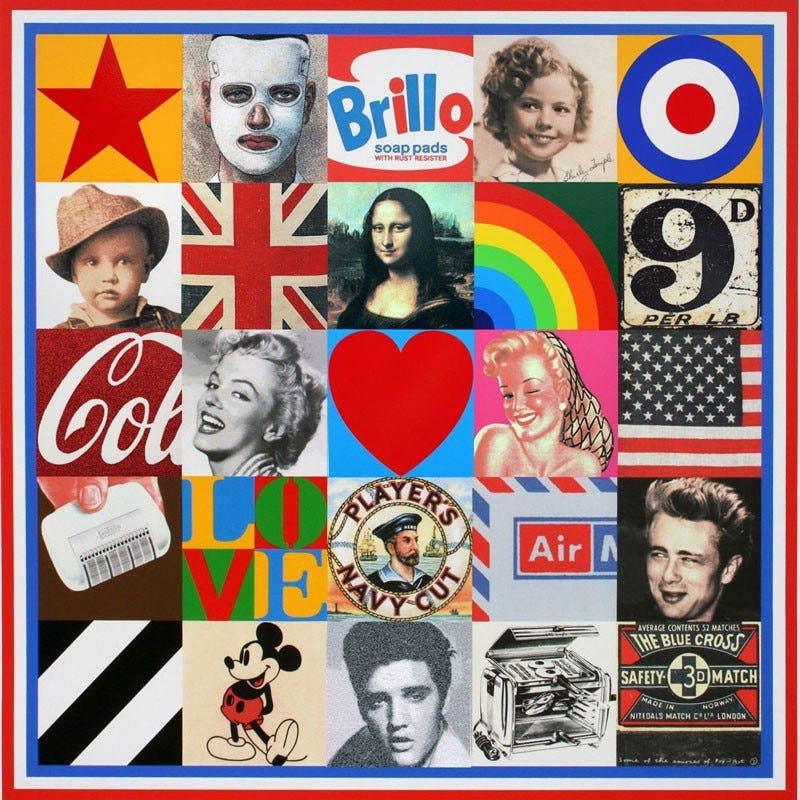
Sir Peter Thomas Blake is an English pop artist, best known for co-creating the sleeve blueprint for the Beatles' album Sgt. Pepper's Lonely Hearts Club Band and for two of the Who'due south albums. His other all-time known works include the cover of the Band Assistance single "Practice They Know Information technology's Christmas?", and the Alive Aid concert poster. Blake too designed the 2012 Brit Award statuette.
I of the all-time known British pop artists, Blake is considered to be a prominent figure in the pop art movement. Central to his paintings are his involvement in images from pop culture which have infused his collages. In 2002 he was knighted at Buckingham Palace for his services to art.
Peter Blake, Sources of Pop Fine art 7
Mel Ramos (1935–2018) US
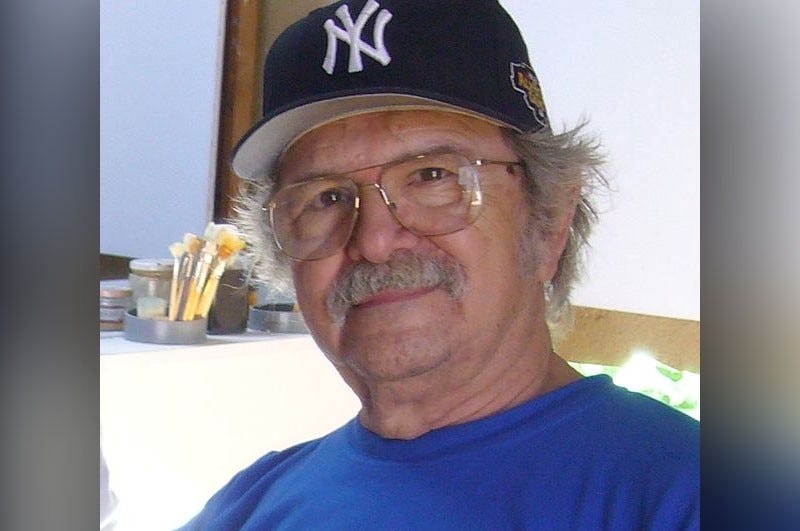
Melvin John Ramos was an American figurative painter, specializing most often in paintings of female nudes, whose work incorporates elements of realist and abstract art. Built-in in Sacramento, California, to a offset generation Portuguese-Azorean immigrant family, he gained his popularity as part of the pop fine art motility of the 1960s. Ramos is "best known for his paintings of superheroes and voluptuous female person nudes emerging from cornstalks or Chiquita bananas, popping up from candy wrappers or lounging in martini glasses".
Ramos had originally started with abstruse expressionism, but gave that upwards later taking on the task of depicting American super-heroes like Superman and Batman. That marked his debut on the path of condign one of the important figures of the pop art motion.
Mel Ramos, Chiquita Assistant (1969), polychrome enamel
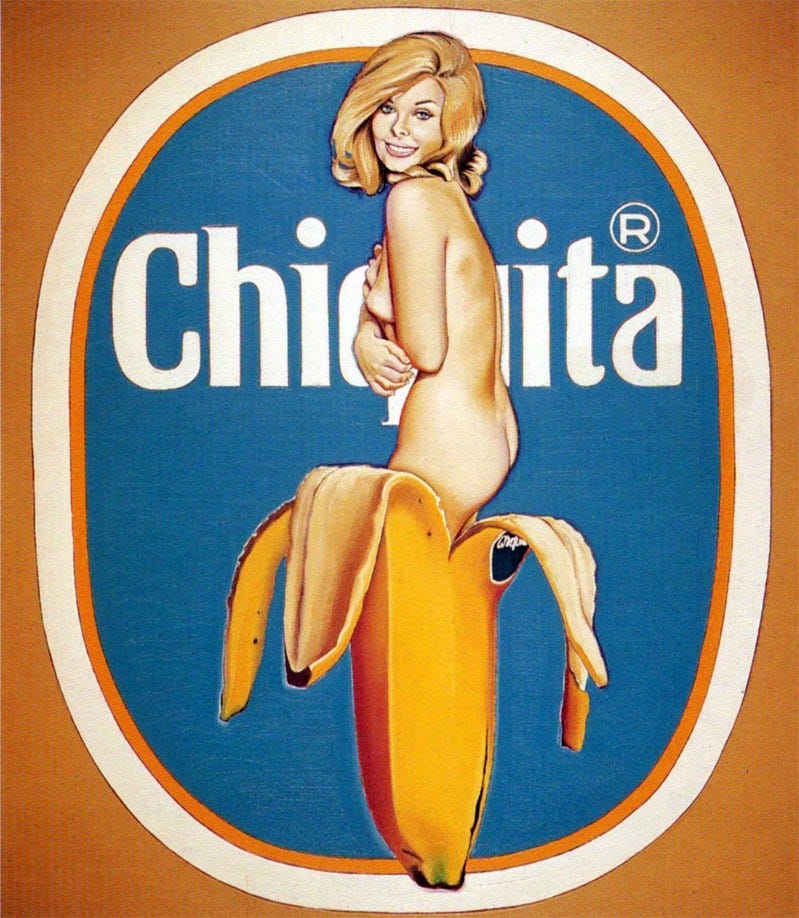
As is well known, Mel Ramos tin exist seen as ane of the concluding pop art artists, even though the irony that tin exist plant in his works is said to distance him from this particular movement. His symbols and subjects are in fact different in meaning from the ones adopted in a similar way past other famous pop art artists, making his work more than subtle.
Patrick Caulfield (1936–2005) United kingdom of great britain and northern ireland
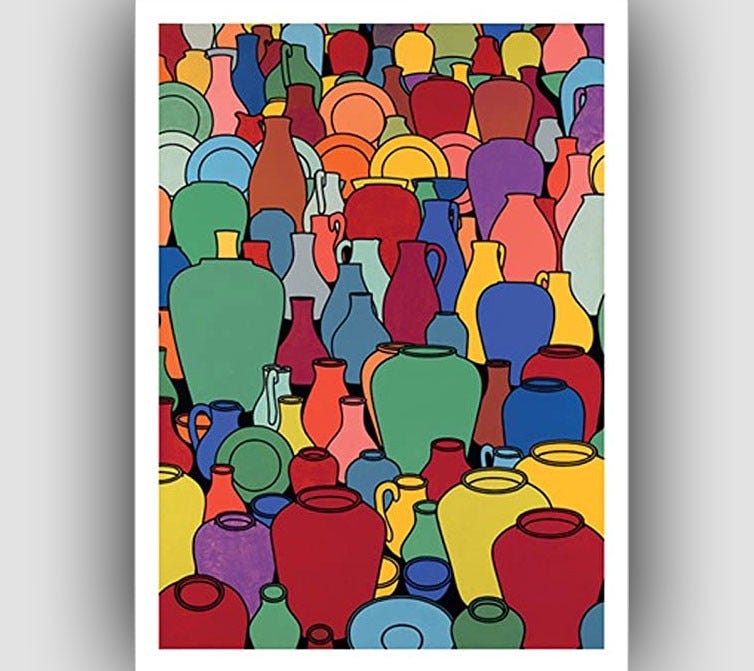
Patrick Joseph Caulfield was an English language painter and printmaker known for his bold canvases, which often incorporated elements of photorealism inside a pared-down scene. Examples of his work are Pottery and Yet Life Ingredients.
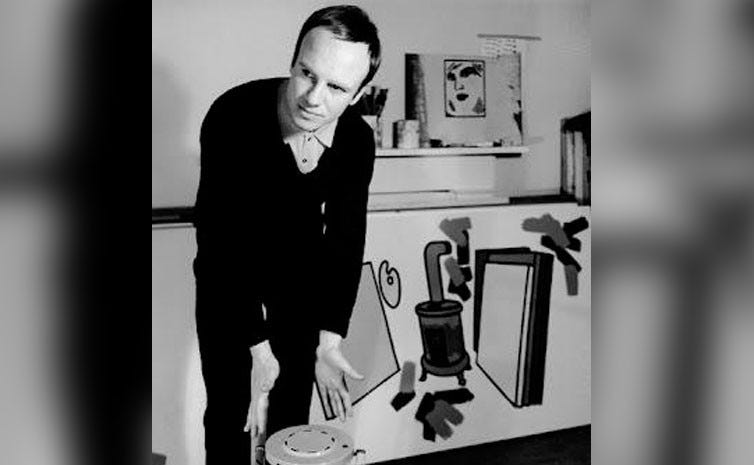
Patrick Caulfield, Pottery
David Hockney (b. 1937) Great britain
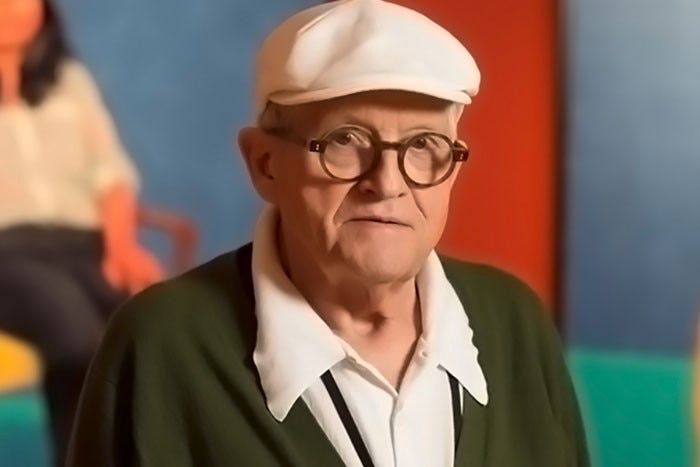
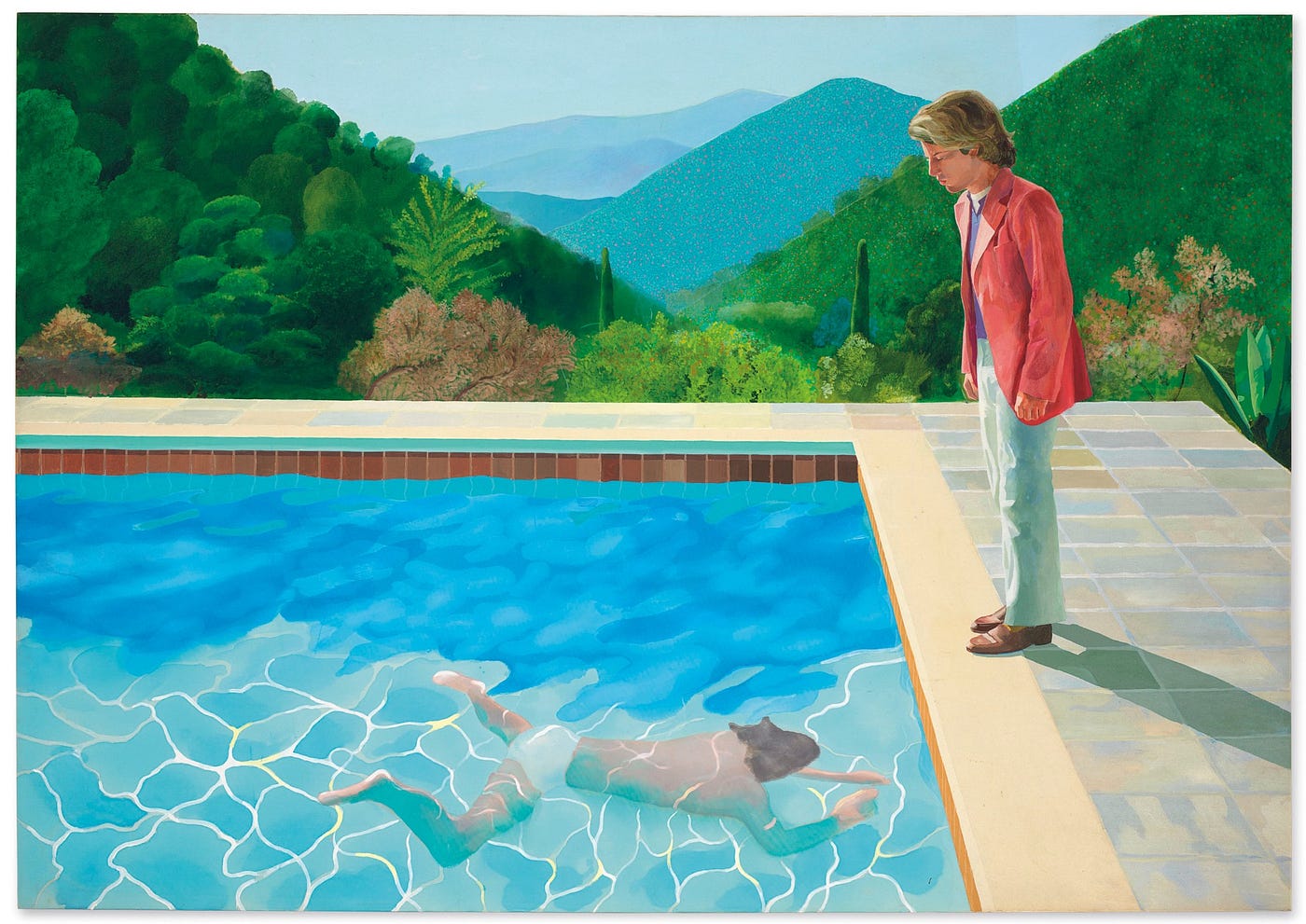
Remaining in the British pop art artists panorama, we tin can easily meet David Hockney's piece of work. Painter, draftsman, printmaker, phase designer and photographer, Hockney is probably the most influential amongst British popular art artists, and is as well the most valuable living creative person, later his contempo xc million dollar sell of his painting "Double Portrait", at Christie's. His painting style combines a figurative thought with the pop colour palette, creating extremely expressive settings that remain highly recognizable.
David Hockney, Portrait of an Artist (Pool with Two Figures), 1972
Marjorie Strider (1931–2014) US
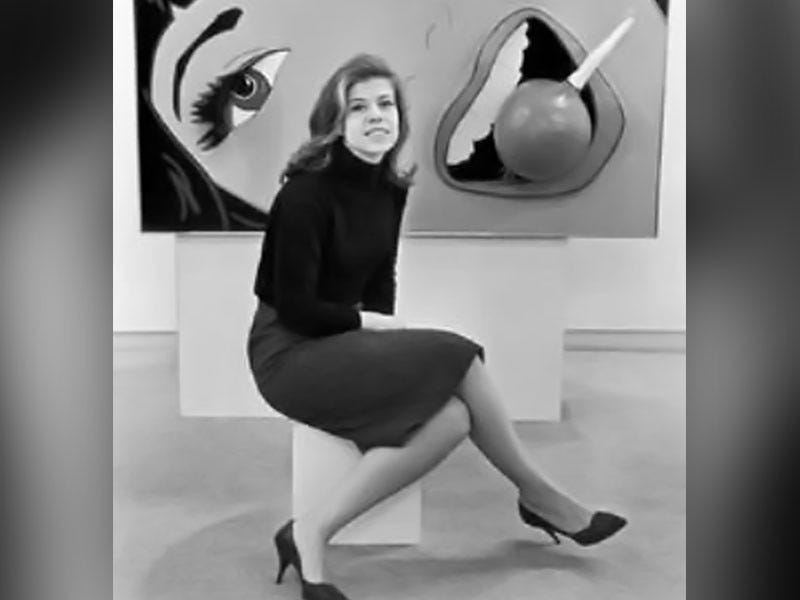
Marjorie Virginia Strider (Jan 26, 1931 — August 27, 2014) was an American painter, sculptor and operation creative person best known for her three-dimensional paintings and site-specific soft sculpture installations.
Strider studied art at the Kansas Urban center Fine art Institute before moving to New York City in the early 1960s. Strider's iii-dimensional paintings of beach girls with "built out" curves were prominently featured in the Step Gallery's 1964 "International Girlie Show" alongside other "pivot-upwardly"-inspired pop art by Rosalyn Drexler, Roy Lichtenstein, Andy Warhol, and Tom Wesselmann.
Marjorie Strider'due south 1963 Girl with Radish

Her comically pornographic Adult female with Radish was made into the imprint image for the show, one of the first successful exhibitions of the then-new gallery. Her bold figural work from this era aimed to subvert sexist images of women in pop culture by turning objectified female bodies into menacing forms that literally got "in your face."
Allen Jones (b. 1937) United kingdom
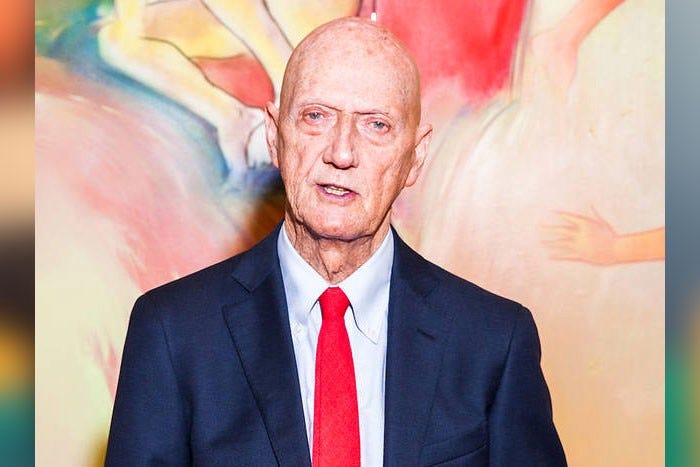
Allen Jones is a British pop artist best known for his paintings, sculptures, and lithography. He was awarded the Prix des Jeunes Artistes at the 1963 Paris Biennale. He is a Senior Academician at the Royal Academy of Arts.
In 2017 he returned to his domicile town to receive the award Honorary Doctor of Arts from Southampton Solent University.
Jones has taught at the Hochschule für bildende Künste Hamburg, the University of South Florida, the Academy of California, the Banff Heart School of Fine Arts in Canada, and the Berlin University of the Arts.
His works reside in a number of collections; including the Tate, the Museum Ludwig, the Warwick Arts Eye and the Hirshhorn Museum.
Tabular array and Chair, involving fibreglass "fetish" mannequins, 1970
George Condo (b. 1957) United states of america
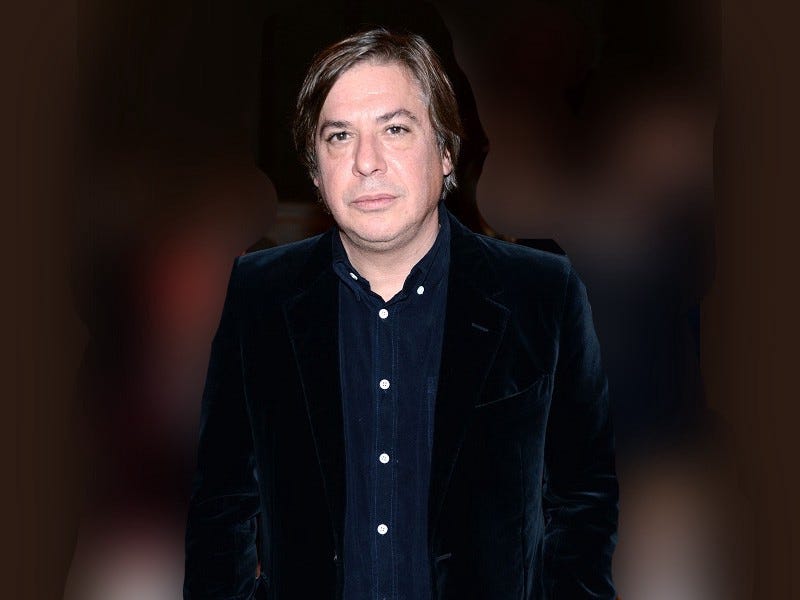
George Condo is an American gimmicky visual artist. He works in painting, drawing, sculpture, and printmaking, and lives and works in New York City.
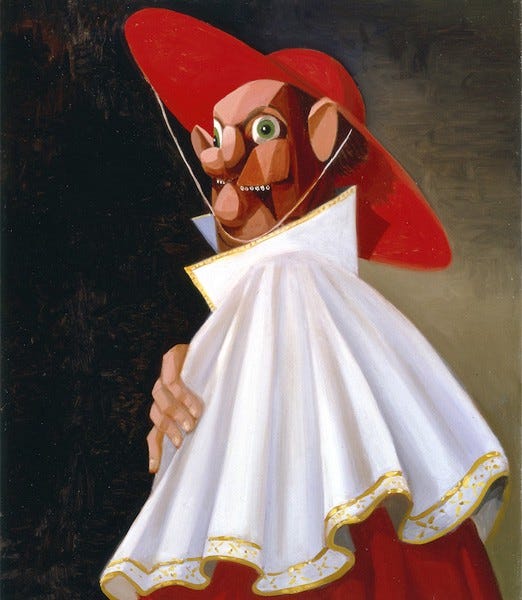
As only stated, Warhol's Factory was a place where many other interesting pop artists developed their style of budgeted painting and modern pop fine art symbols. This was too the case of George Condo, a highly respected creative person that used the pop narrative to create a way of his own, which was subsequently labelled as artificial realism. Condo's paintings requite a mind-blowing interpretation of how realism is felt and experienced in the cyber society, and are still dominating the gimmicky art scene nowadays, equally we tin meet for ourselves if we nourish some of the most influential art fairs and museums.
George Condo, The Cracked Cardinal (2001), oil on canvass
Rosalyn Drexler (b. 1926) US
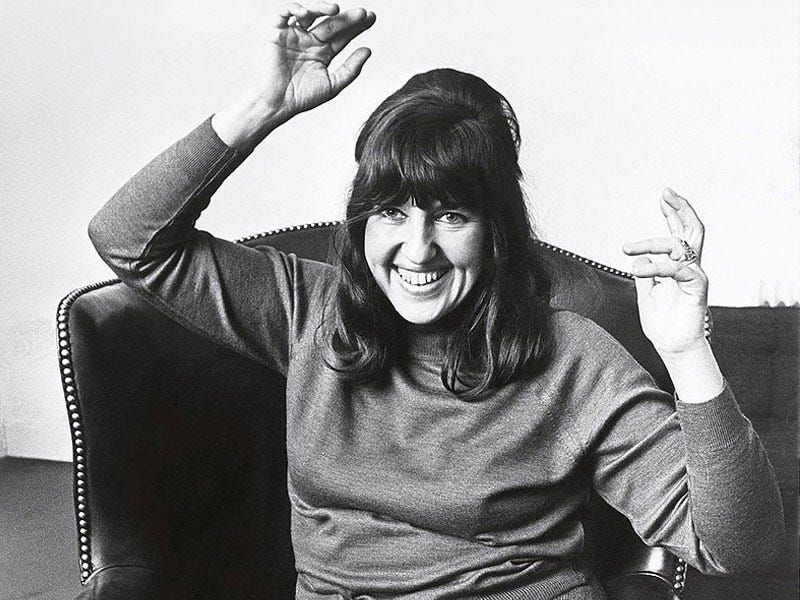
Rosalyn Drexler (built-in 25 November 1926) is an American visual creative person, novelist, Obie Honour-winning playwright, and Emmy Award-winning screenwriter, and onetime professional wrestler. Although she has had a polymathic career, Drexler is perhaps best known for her popular art paintings and as the author of the novelization of the motion picture Rocky, nether the pseudonym Julia Sorel. Drexler currently lives and works in New York City, New York.
Past 1961, Drexler started changing her piece of work from assemblage to Pop Art. She searched through old magazines, posters, and newspapers to source imagery for her paintings. Her self-taught process consisted of blowing upward images from magazines and newspapers, collaging them onto canvas, and then painting over them in bright, saturated colors.
Drexler signed with Kornblee Gallery, where she had solo shows in 1964–1966. In January 1964 her work was included in the "Get-go International Girlie Exhibit" at Pace Gallery, New York. She and Marjorie Strider were the merely 2 women Popular artists included in this exhibition, which besides featured Warhol, Lichtenstein, and Tom Wesselmann. Drexler exhibited collages cut and pasted from girlie magazines. The work scandalized some, but her paintings were generally well received.
The Defenders, 1963, Colby College Museum of Art, Waterville, Maine
Drexler'due south paintings continued to enjoy favorable reviews and were exhibited in major Pop art exhibitions throughout the 1960s. She did not gain the level of recognition of many of her male peers; the major themes in her paintings — violence against women, racism, social alienation — were controversial topics in a genre known for being "cool" and detached.
James Gill (b. 1934) Usa
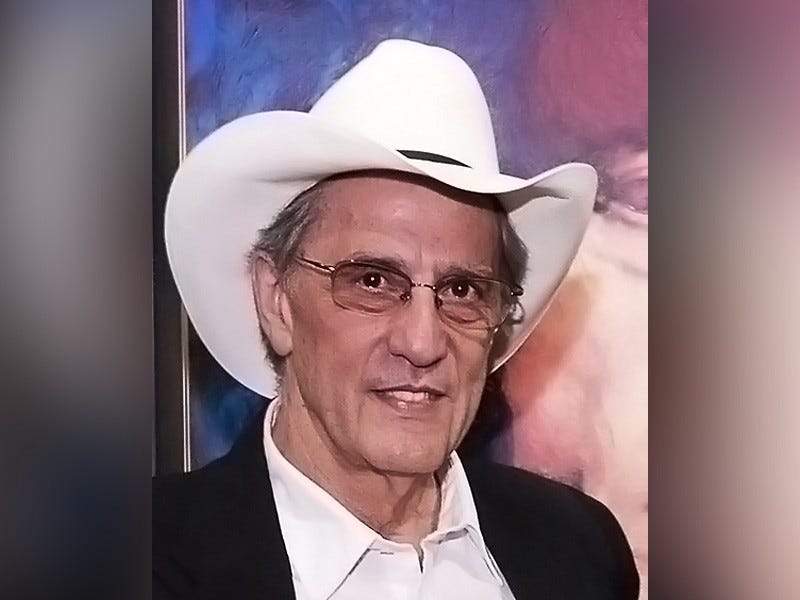
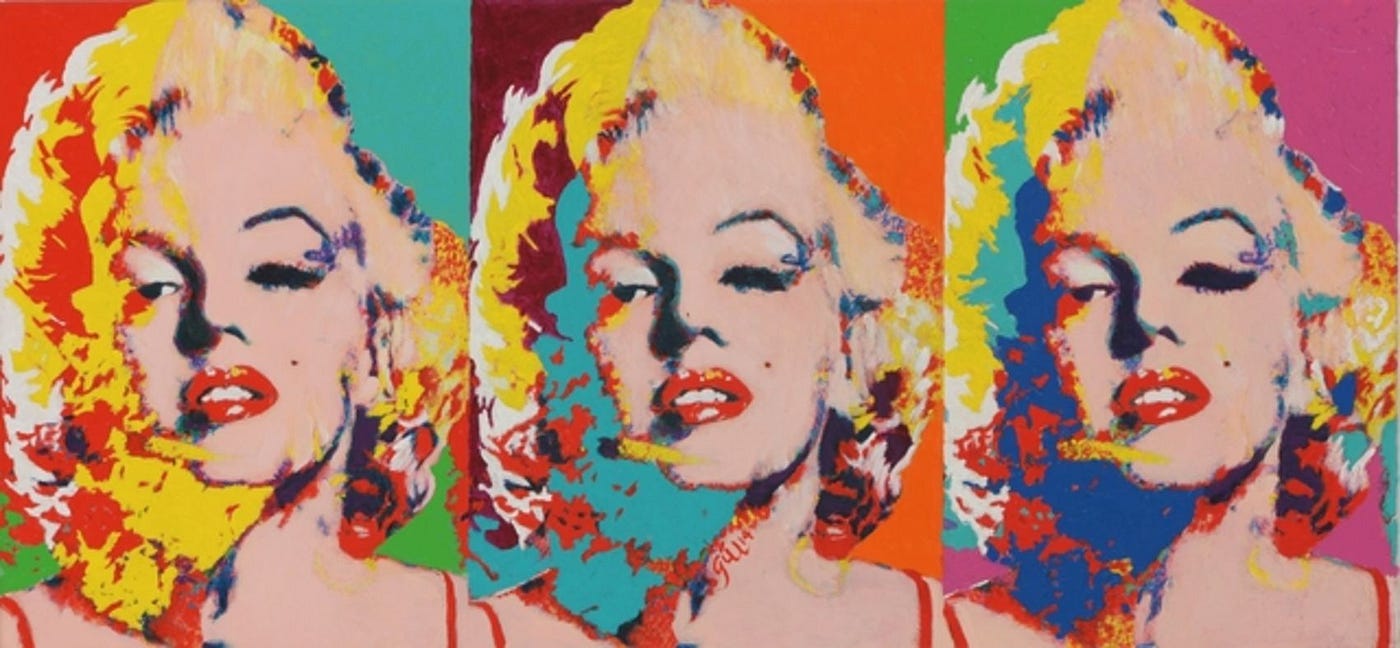
James Francis Gill is an American creative person and one of the protagonists of the Pop art movement. In 1962, the Museum of Mod Art included his Marilyn Tryptych into its permanent drove. At the acme of his career, Gill retired. He returned to the art scene around 30 years later.
Equally a proof of the importance and repetitiveness of the subjects in nearly of the famous popular art artists' piece of work, we tin wait at James Francis Gill's production; an American painter who grew in fame ever since his "Marylin Tryptych" was included in the MOMA collection in 1962. His impressive career was at a peak point when he decided to retire in 1972, due to his misbelief in the social and political situation he lived in. But his exile was interrupted after about xxx years when he decided his comeback in the art scene with a show at the San Angelo Fine Arts Museum.
James Francis Gill, Three Faces of Marilyn (2014), acrylic on sail. Galerie Urs Reichlin
Marisol (Escobar) (1930–2016) US
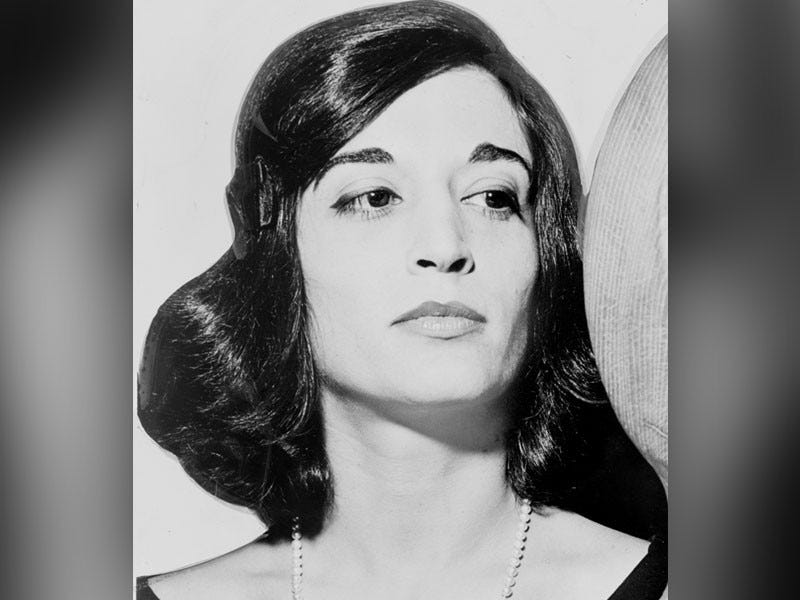
Marisol Escobar, otherwise known just as Marisol, was a French sculptor of Venezuelan heritage who worked in New York City.
In the following decade of the 1960s Marisol began to be influenced by pop artists such as Andy Warhol and Roy Lichtenstein. She appeared in 2 films by Warhol, The Kiss and 13 Near Beautiful Girls.
Ane of her best-known works from this period is The Party, a life-size group installation of figures at the Toledo Museum of Fine art. Her predisposition toward the forms of Popular Art stems, in function, from some of her earliest art grooming, dating dorsum to her time nether Howard Warshaw at the Jepson Art Institute.
Author Albert Boimes notes the profound effect that Comic volume art had on the Pop Artists including on Marisol herself. He writes that comic strips and comic books, as well every bit animated cartoons, held a particular entreatment for an entire generation of artists born around 1930, including Claes Oldenburg, Mel Ramos, Andy Warhol, Tom Wesselmann, James Rosenquist, and of course Roy Lichtenstein, the oldest of this group.
Marisol, "Women and Dog" (1963–64), on view in the Whitney Museum exhibition 'America Is Hard to See'
Jeff Koons (b. 1955) Usa
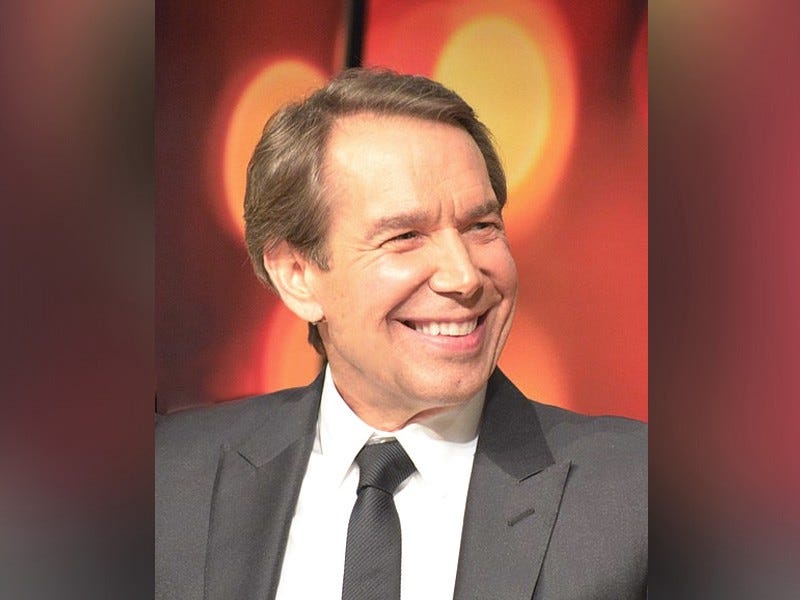
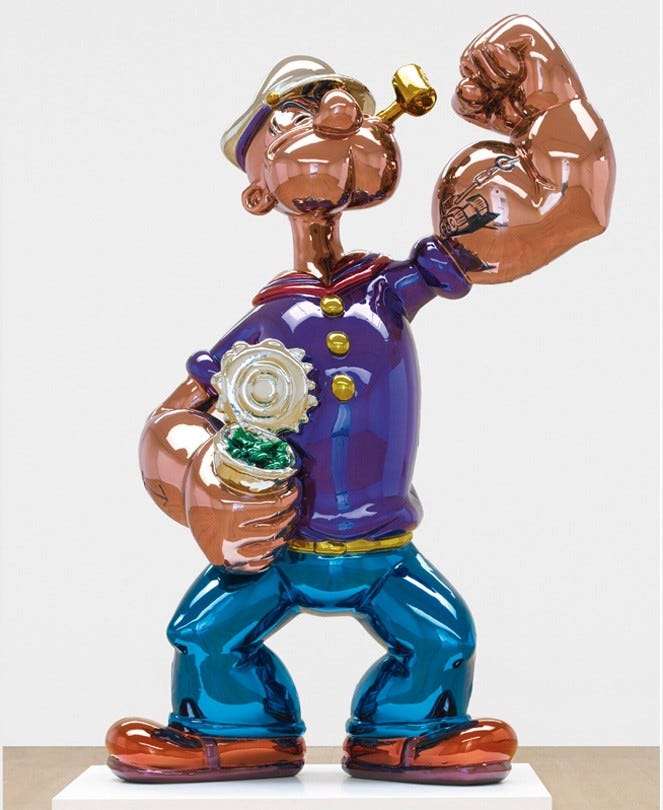
Jeffrey L. Koons is an American creative person recognized for his work dealing with popular civilisation and his sculptures depicting everyday objects, including balloon animals — produced in stainless steel with mirror-terminate surfaces. He lives and works in both New York City and his hometown of York, Pennsylvania. His works have sold for substantial sums, including at to the lowest degree two record auction prices for a piece of work by a living artist, including $91.1 million with fees in May 2019, for his Rabbit, purchased past Robert Due east. Mnuchin co-ordinate to a New York Times article.
While talking near mass consumption and collective iconic aesthetics, we cannot forget about Jeff Koons. His kitschy and colourful sculptures get in bear upon in a unique manner with the full-on positive lodge they were created for, making his neo-pop shapes close relatives of Andy Warhol's iconic pop art, not only for their colorfulness merely besides for their monumentality and influential power.
Jeff Koons, Popeye (2009–2011), mirror polished stainless steel with transparent color coating. Sonnabend Gallery, New York
Banksy (b. nineteen.. ) UK

Banksy is an anonymous England-based street artist, political activist, and pic director, active since the 1990s. His satirical street fine art and subversive epigrams combine dark humour with graffiti executed in a distinctive stenciling technique. His works of political and social commentary accept been featured on streets, walls, and bridges throughout the world. Banksy's work grew out of the Bristol clandestine scene, which involved collaborations between artists and musicians. Banksy says that he was inspired by 3D, a graffiti artist and founding member of the musical group Massive Assail.
Banksy, Girl With Balloon (2006)
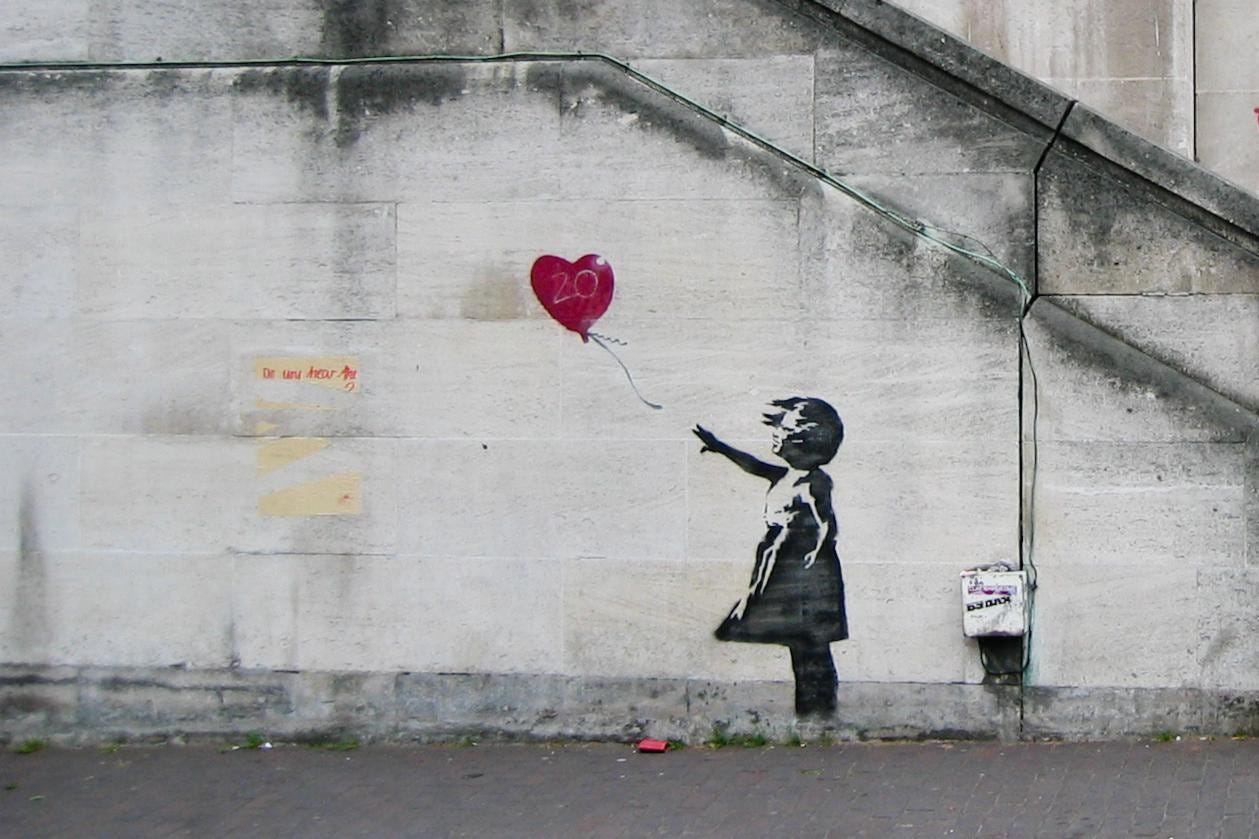
Anonymous street artist "Banksy" is probably the about famous pop art artist present. His fame is worldwide due to his public interventions and his provocative approach that oftentimes got him labelled as an outlaw and made him wanted by the Interpol. His style is of strong street art derivation and his medium is mainly sprayed paint — stencil, while his symbols are mainly related to the concurrent political situation and of mediatic purpose; like the globe-famous "Shredded Painting" example.
Stik (b. 1979) UK
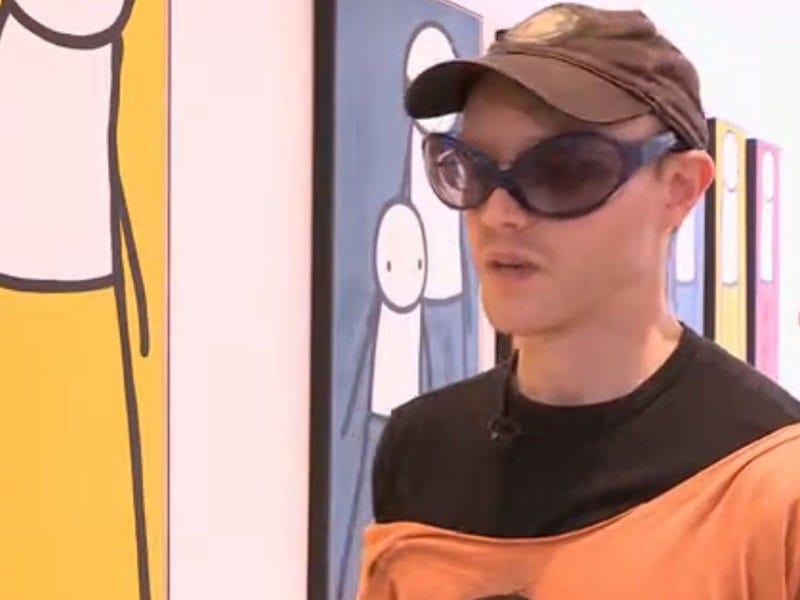
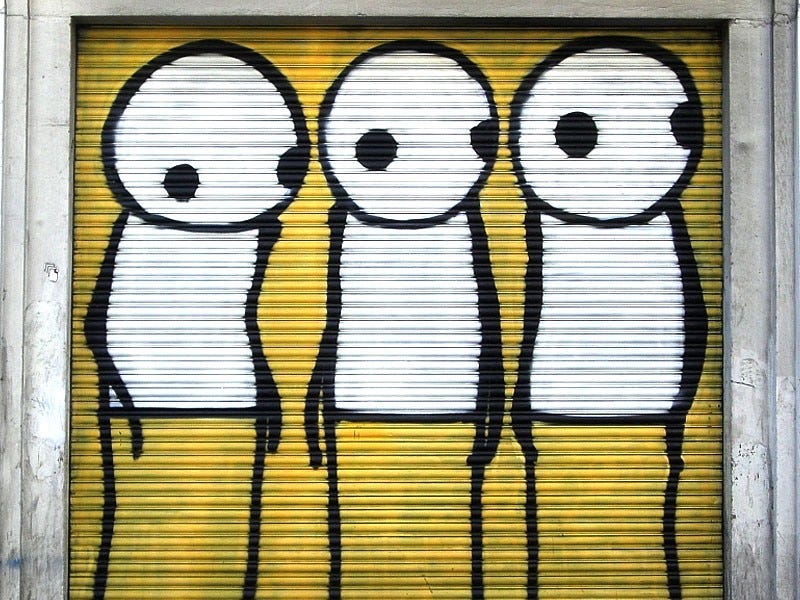
Stik is a British graffiti artist based in London. He is known for painting big stick figures. His work has fetched over £150,000 at auction.
Nowadays when we walk around London, we encounter a series of extremely expressive nevertheless simplified figures painted on street walls. These are the artworks of British graffiti artist Stik, an artist who has come up from the blocks to the earth's finest galleries and has seen his work auctioned by Christie's at the impressive corporeality of 150.000£. His way is unique in colour and form and shows a very contemporary derivation on the finest modern popular art artists.
Stik'south graffiti on a shopfront shutter in Shoreditch, London.
Damien Hirst (b. 1965) UK
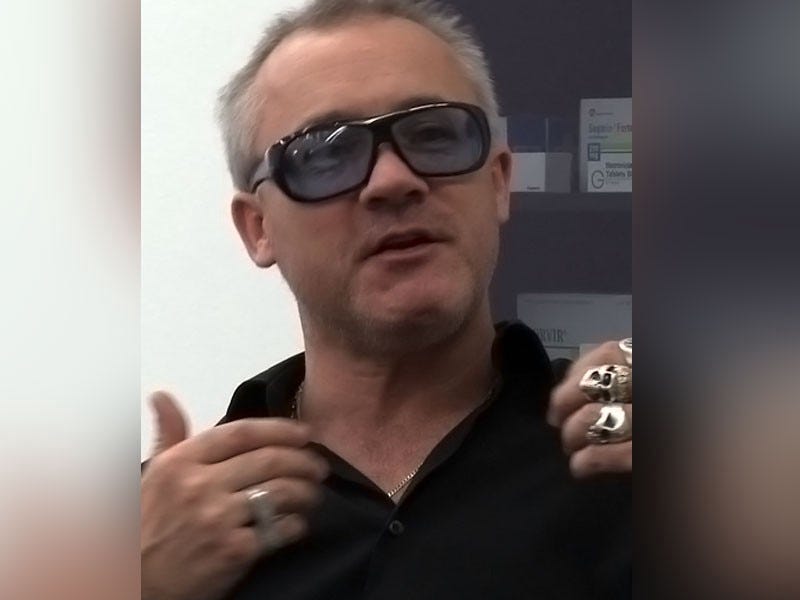
Damien Steven Hirst is an English artist, entrepreneur, and art collector.He is ane of the Young British Artists (YBAs), who dominated the art scene in the U.k. during the 1990s. He is reportedly the Great britain's richest living artist, with his wealth valued at £215m in the 2010 Lord's day Times Rich List.
Expiry is a central theme in Hirst's works. He became famous for a serial of artworks in which expressionless animals (including a shark, a sheep and a cow) are preserved — sometimes having been dissected — in formaldehyde. The all-time-known of these was The Physical Impossibility of Decease in the Mind of Someone Living, a 14-human foot (4.3 m) tiger shark immersed in formaldehyde in a clear brandish case. He has too made "spin paintings", created on a spinning circular surface, and "spot paintings", which are rows of randomly coloured circles created by his assistants.
Damien Hirst, Skull with Clocks in Eyes (2008), household gloss on sail.
Damien Hirst and Scientific discipline Ltd.
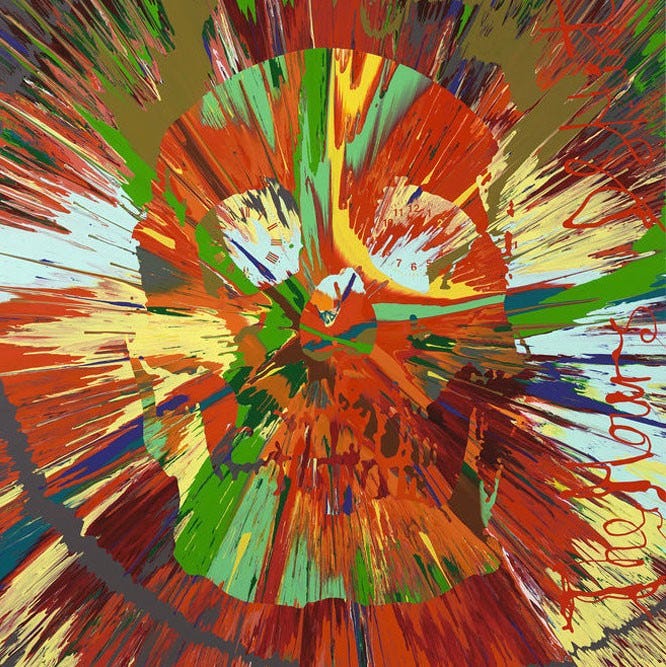
Moving to the European scenery, information technology's important to understand how British pop fine art artists accept been monumental in these last few decades. One of these titans is certainly Damien Hirst, whose conceptual art career and the path followed with the YBA collective, hasn't denied him the time to too talk to the mass. His works take frequently adopted the pop fine art aesthetic and used it to create symbols of immediate consumption, like his world-famous scull paintings and spin paintings.
Yayoi Kusama (b. 1929) Japan
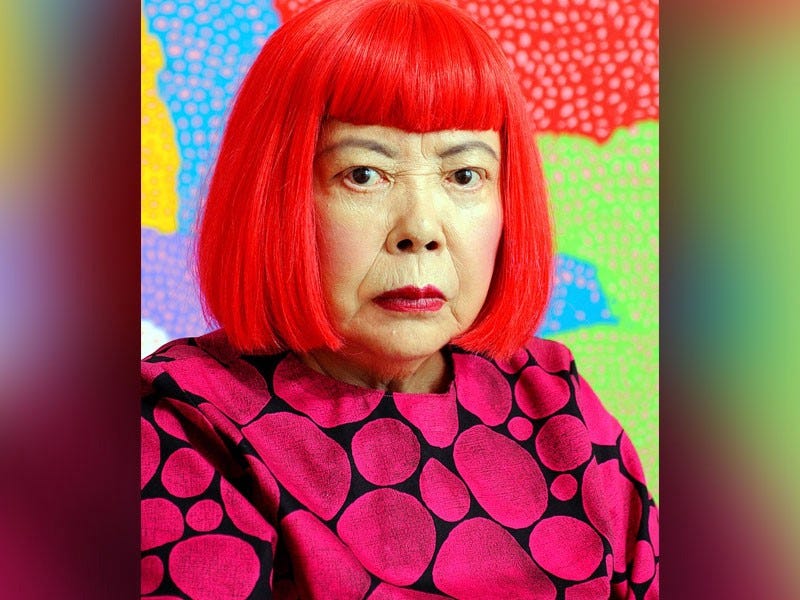
Yayoi Kusama is a Japanese contemporary artist who works primarily in sculpture and installation, only is as well active in painting, performance, film, style, poesy, fiction, and other arts. Her work is based in conceptual art and shows some attributes of feminism, minimalism, surrealism, Fine art Brut, pop art, and abstruse expressionism, and is infused with autobiographical, psychological, and sexual content. She has been acknowledged as one of the most important living artists to come out of Japan.
Yayoi Kusama, the artist with her work "Tentacles" (2012–2015)
Coming from a different background, similar the one of the extremely formal painting method named "nihonga", Yayoi Kusama moves to New York Metropolis in 1958, at the age of 29 years one-time. She was attracted to the powerful and vivid American popular art scene and composite into it perfectly with her performances and her Infinity Net paintings. Since she has moved back to Japan as a famous pop art artist, she has implemented her studies about infinity with her all-around sculptures, which create settings of amplified reality.
Takashi Murakami (b. 1962) Nippon
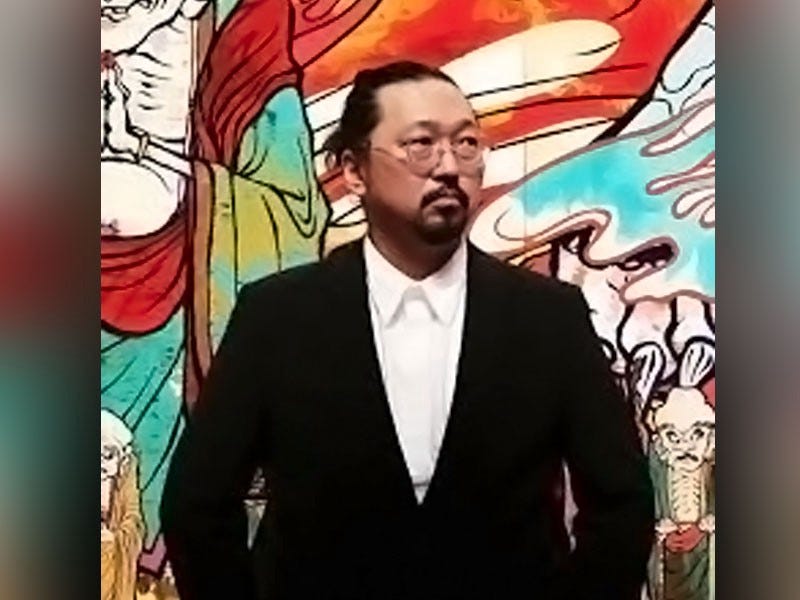
Takashi Murakami is a Japanese gimmicky creative person. He works in fine arts media (such equally painting and sculpture) every bit well as commercial media (such equally fashion, merchandise, and animation) and is known for blurring the line betwixt high and low arts. He coined the term "superflat", which describes both the aesthetic characteristics of the Japanese artistic tradition and the nature of mail-war Japanese civilisation and society, and is likewise used for Murakami'south creative style and other Japanese artists he has influenced.
Takeshi Murakami, Mr. dub And Bunny, digital art (2019)
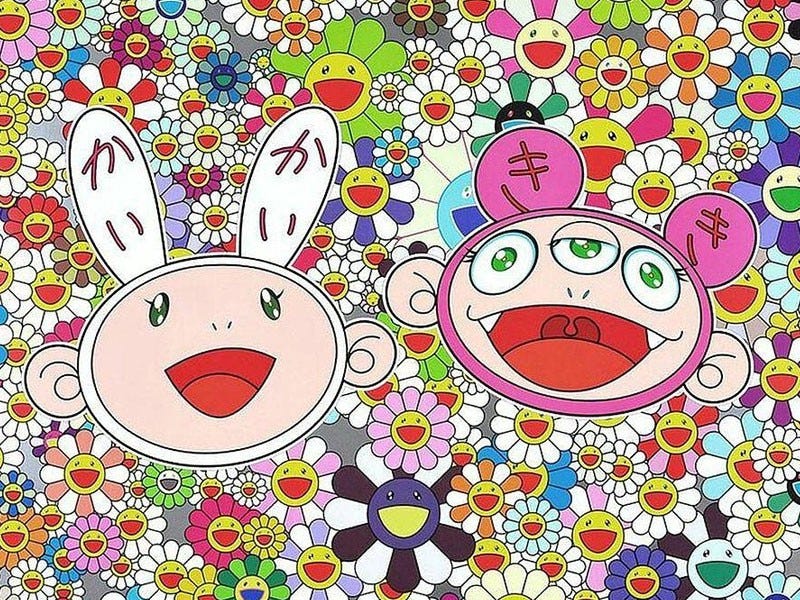
While the about famous popular art artists are often seen as American, in more recent times also Nihon has been recognized as the motherland of some smashing modernistic pop art artists, like Takeshi Murakami, who was defined every bit the nearly influential figure of the Japanese contemporary culture. Painter and sculptor, Murakami developed artworks inspired to his country's iconography, which have had a massive touch in the contemporary scene.
Nara Yoshimoto (b. 1959) Japan
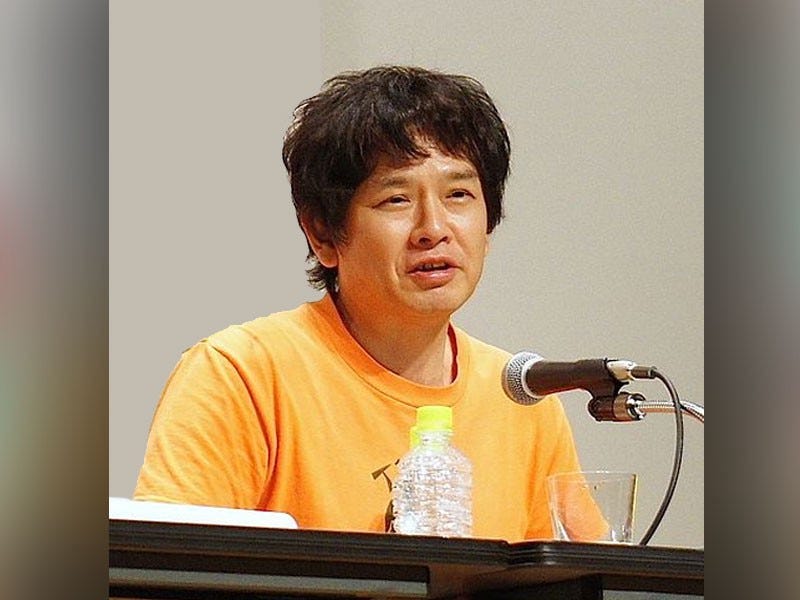
Yoshitomo Nara is a Japanese artist. He lives and works in Nasushiobara, Tochigi Prefecture, though his artwork has been exhibited worldwide. Nara has had nearly 40 solo exhibitions since 1984. His art work has been housed at the MoMA and the Museum of Gimmicky Art, Los Angeles (MOCA). His about well-known and repeated subject is a immature girl with piercing eyes.
Nara Yoshimoto, Knife Behind Back (2000), oil on canvas
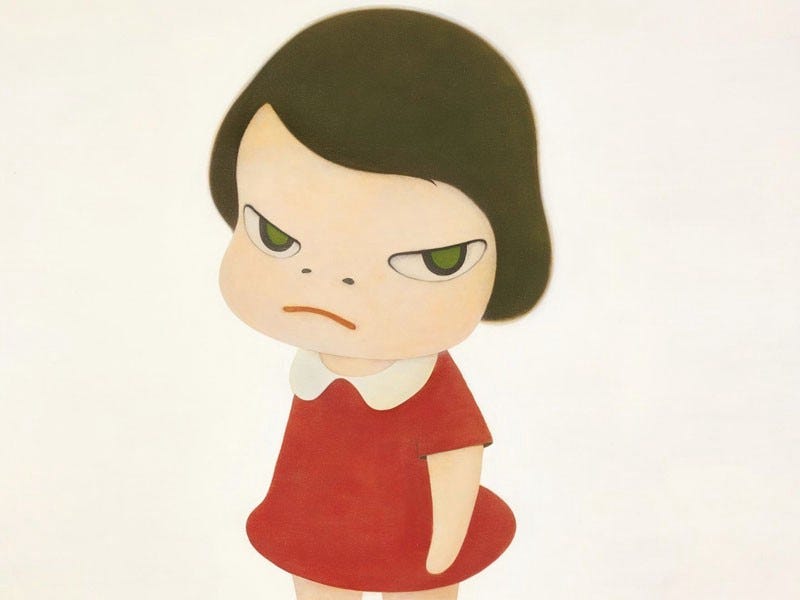
His work represents some simple figures that frequently look harmless like children or domestic animals, made with cartoonish features, but that at a sure degree of attention reveal hostile objects like weapons held past these "cute" subjects and very harsh face expressions that fill the observer with hateful feelings.
Mimmo Rotella (1918–2006) Italy
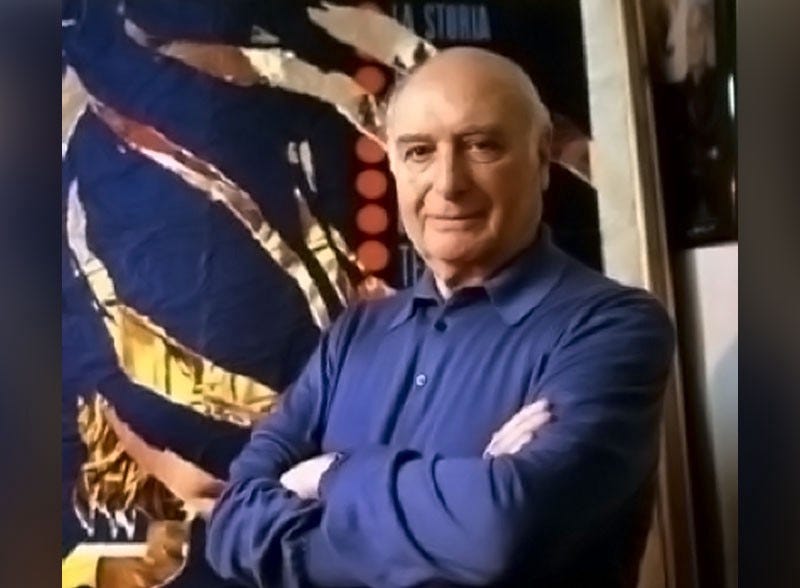
Domenico "Mimmo" Rotella was an Italian artist considered an important figure in post-war European art. Best known for his works of décollage and psychogeographics, made from torn advertising posters. He was associated to the Ultra-Lettrists an offshoot of Lettrism and later was a member of the Nouveau Réalisme, founded in 1960 by the art critic Pierre Restany.
Mimmo Rotella, Sempre lei Marilyn (2002), décollage on canvass
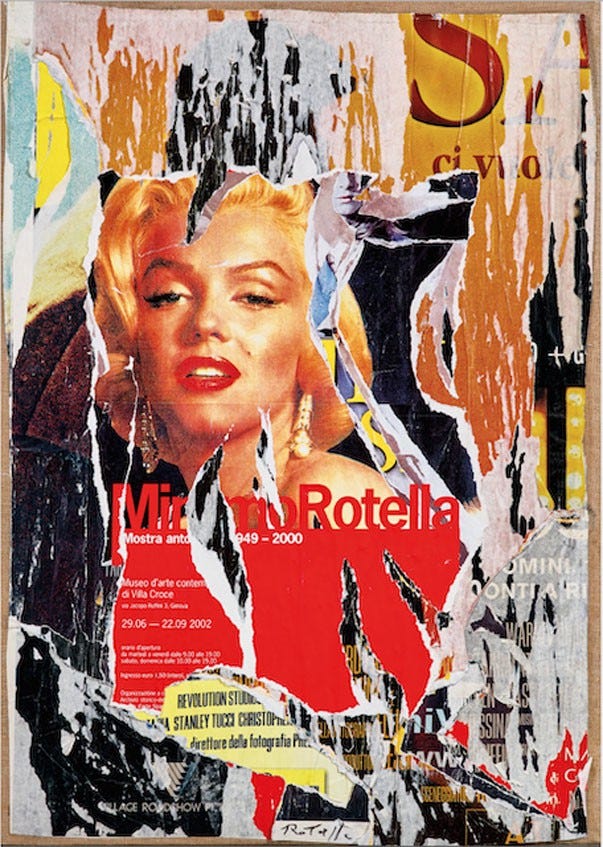
Domenico Rotella, also known as Mimmo Rotella, was an incredibly active artist in the 2nd half of the 20th century, close both to nouveau réalisme and pop art movements. This incredibly fine pop art artist used the seridècollage technique to create a serial of ripped off affiche paintings and assemblages of tremendous expressive power and aesthetic delicacy.
Hariton Pushwagner (1940–2018) Kingdom of norway
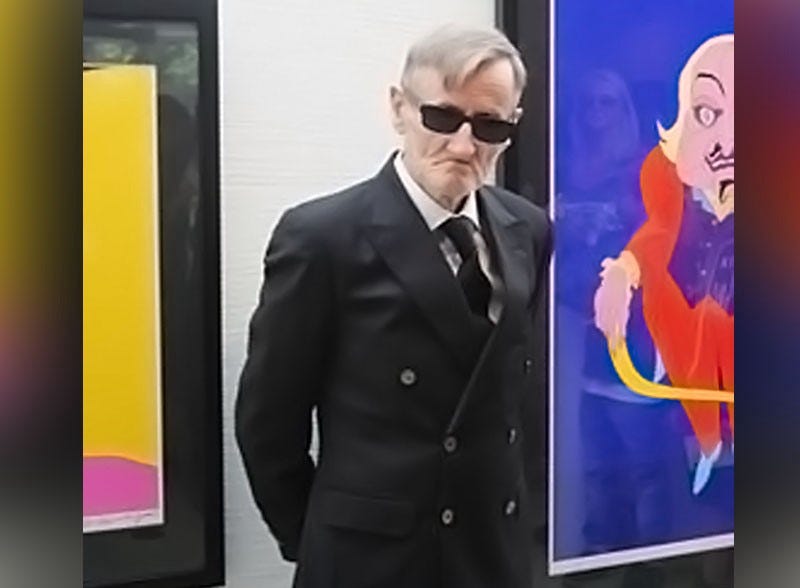
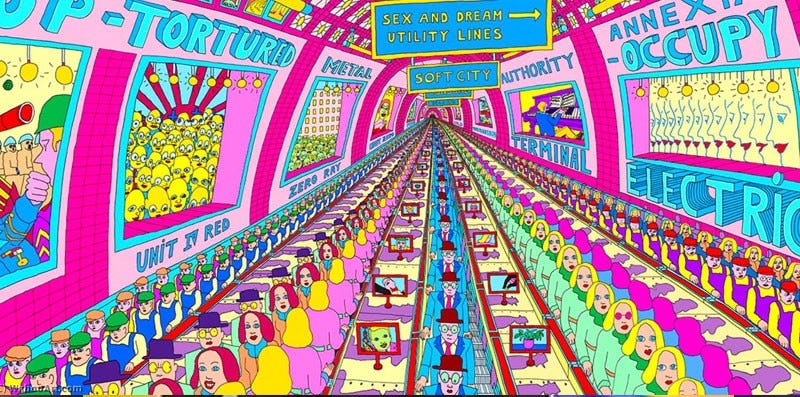
Terje Brofos, who's artist name was Hariton Pushwagner, was a Norwegian graphic and painter, who spent many years struggling to find his personal mode, before becoming famous for his strongly narrative and cartoonish images, partially derived past his amore for Axel Jensen's.
Hariton Pushwagner, Re Traversa (Soft metropolis) (1969), print on paper
Wayne Thiebaud (b. 1920) The states
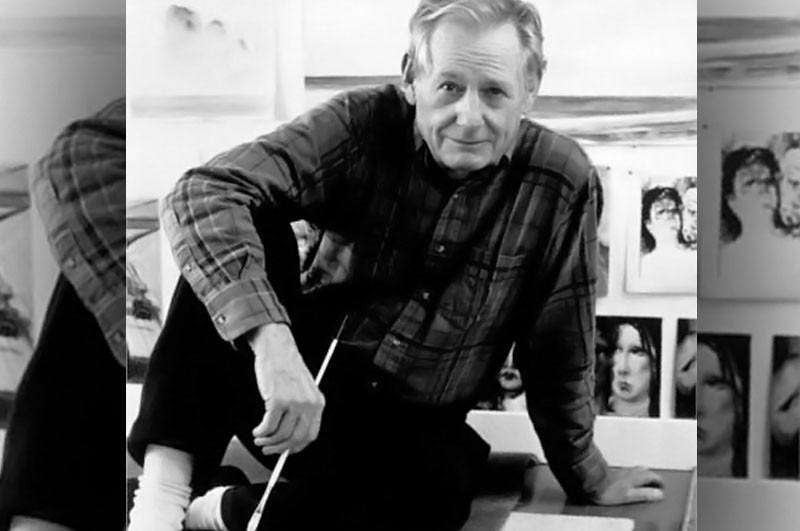
Wayne Thiebaud is an American painter known for his colorful works depicting commonplace objects — pies, lipsticks, pigment cans, ice cream cones, pastries, and hot dogs — equally well as for his landscapes and effigy paintings. Thiebaud is associated with the pop art movement because of his interest in objects of mass culture, although his early works, executed during the fifties and sixties, slightly predate the works of the archetype pop artists. Thiebaud uses heavy pigment and exaggerated colors to draw his subjects, and the well-defined shadows characteristic of advertisements are most always included in his work.
Dessert Tray, 1963, oil on canvass
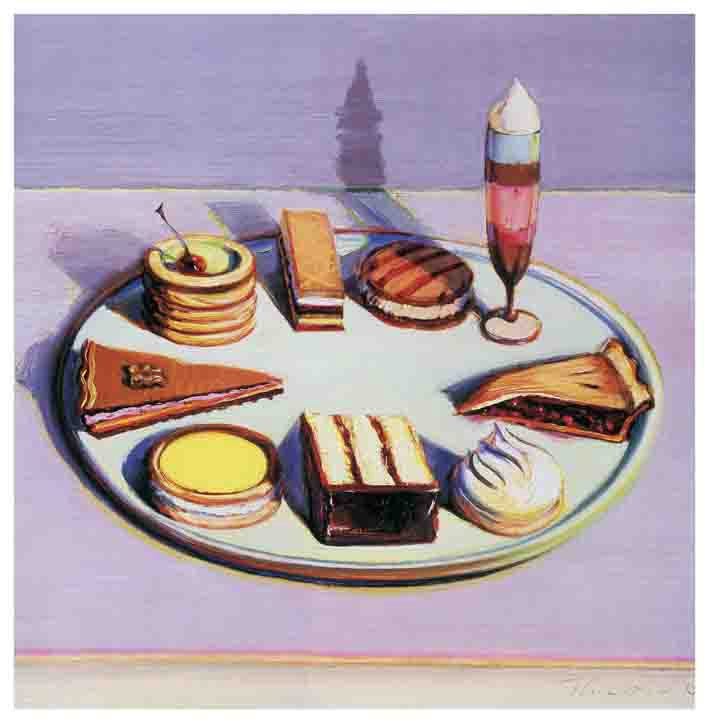
Wayne Thiebaud is a vastly recognized pop art artist. His work is truly of the highest painting standards due to its quality in color and technique. In his research, he studies everyday objects that in his opinion have been left apart by artists, mayhap because they looked off-putting such as sweets like lollipops, which were peradventure seen as superficial subjects. Although he is oftentimes referred to every bit a famous pop art artist, he sometimes is said to be dissimilar from the pop culture due to the unlike painting technique he has adopted.
Peter Max (b. 1937) Germany — US
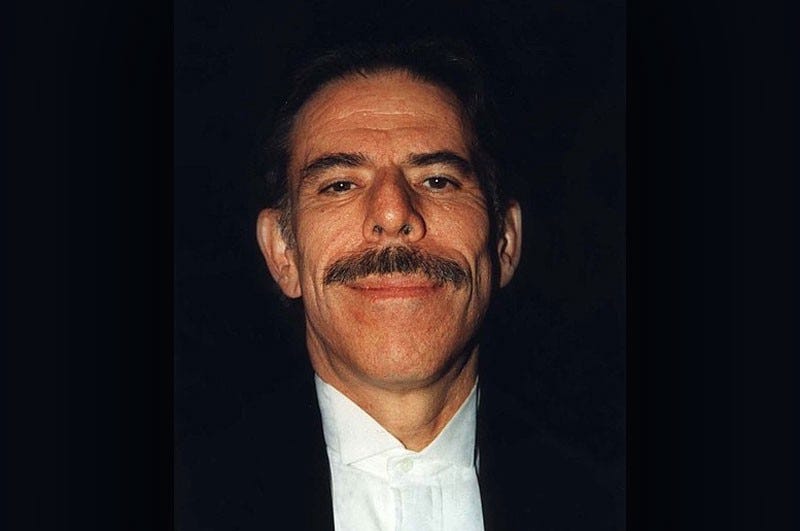
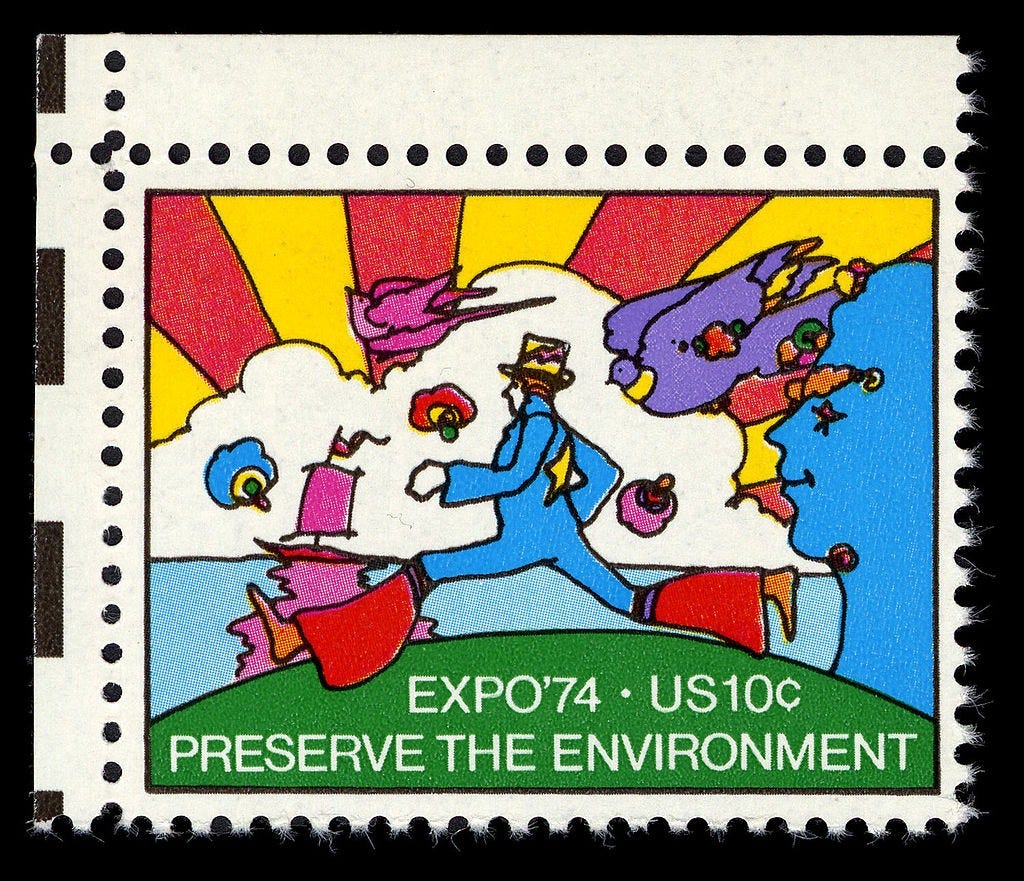
Peter Max (born Peter Max Finkelstein) is a German language-American creative person known for using brilliant colours in his work. Works by Max are associated with the visual arts and culture of the 1960s, particularly psychedelic fine art and pop art.
U.Southward. postage stamp featuring Max's artwork commemorating Expo '74
Peter Max, Marilyn, from the retrospective "The Nerveless Works 1960–2017"
Peter Max's piece of work is recognizable for the hallucinating effect given by his colours. His subjects are in relation to the 1960'south art scene and are implemented by the distinctive and calculated approach that the artist has with space.
Niclas Castello (b. 1978) Germany
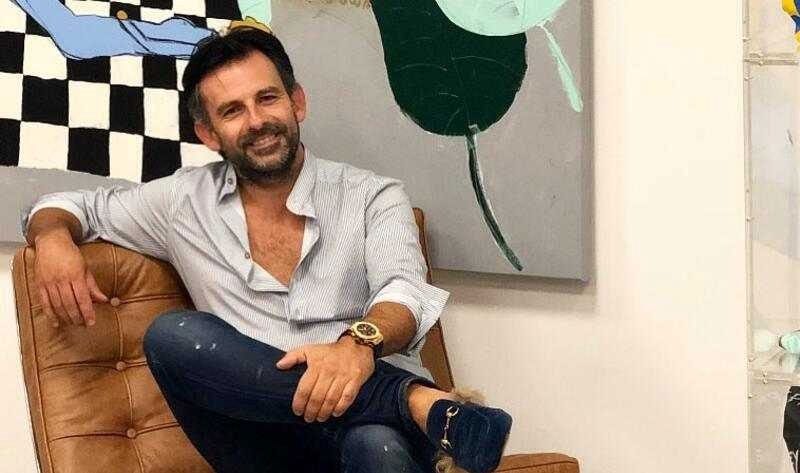
Niclas Castello (real name Norbert Zerbs) is a German contemporary artist influenced by pop art, neo-expressionism and street art. He is well known for sculptures like The Kiss, but likewise does paintings.
Niclas Castello, The Buss (Shiny Reddish) (2013–2015). Courtesy of Guy Hepner
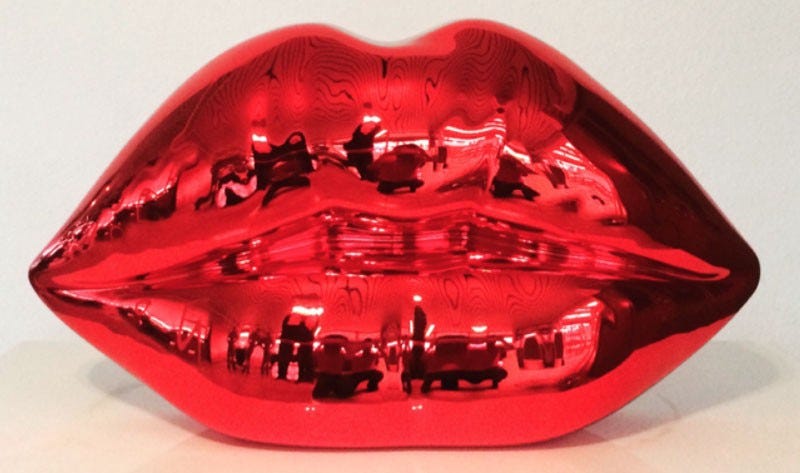
Niclas Castello is for sure a very talented artist from our generation. He became famous due to works like "The Buss", in which we can discover a neo-popular variation of other famous pop fine art artists' subjects, simply also some neo-expressionist and street-art influences.
In Conclusion
This art motion gave the states so many talented pop art artists, each with its own unique style. The types of popular fine art and techniques vary from meticulously literal paintings, to silk-screen prints, to collage and 3D art works.
"Popular civilisation is not about depth. It'southward about marketing, supply and demand, consumerism. " — Trevor Dunn
If you lot similar the pop art fashion here are some useful resources that will assist yous create the perfect pop fine art designs. Also, don't forget that the net is a huge source of Pop Art ideas.
How To Create A Pop Art Effect [Photoshop Tutorial]
If you like pop art, yous can hands create a digital Pop Art effect using Photoshop or other graphic design software like MockoFun.
Check out this pop art Photoshop tutorial for details on how to achieve the Warhol effect in Photoshop. You can turn your photo into a pop art poster.
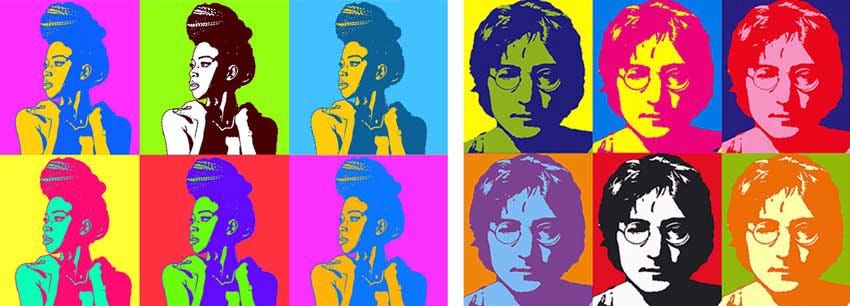
Popular Art Photoshop Deportment [Quick Results]
If y'all don't want to brand all these steps manually, you can try these quick and easy to apply Photoshop actions:
- Pop Art Warhol Issue
- Pop Fine art Lichtenstein Effect
Turn Photo to Pop Art [No Tool Required]
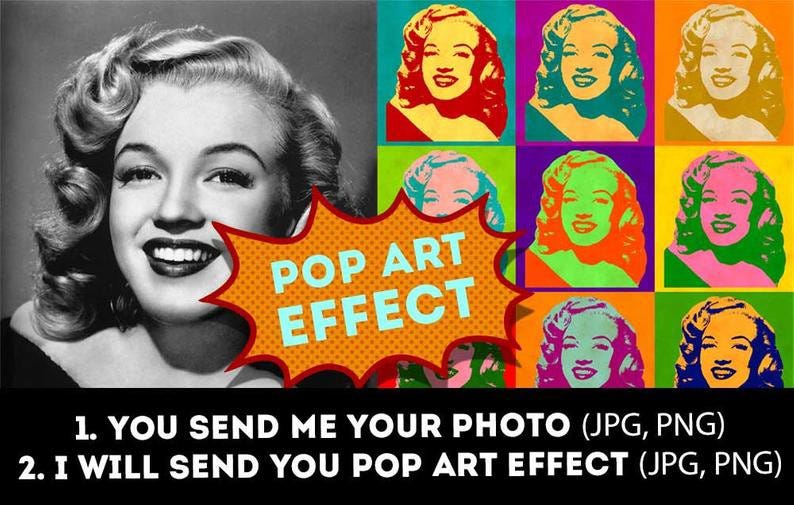
If you don't have Photoshop only you want to plow your photo to pop art, check out this pop art portrait from Etsy.
Y'all don't need a graphic design software like Photoshop. You only ship the photograph and you go back a popular art style prototype.
"Pop is about speaking everybody's linguistic communication. The imagery and iconography we instantly recognize. When you tin can rely on things that the public already knows, you're dealing with Popular." ― Nuno Roque
Source: https://medium.com/@codingdudecom/pop-art-artists-3153d33cd2bf
0 Response to "Three Abstract Artists Who Shifted Toward a Pop Art Aesthetic by the Mid1950s"
Post a Comment